My camera gear on Safari

My Safari camera bag is getting prepped. Everytime I head out on my Safari, the what camera and lens to take itch starts. When you follow some awesome photographers you can’t help but want to come back with those amazing pictures. Those captures where you can see every lion whisker or see the feathers on a flying bird crystal clearly. I aspire to be like them.

But I have to remember that is their passion. Their job. They have high-end camera equipments and are prepared to carry the heavy weight lenses in special bags. They may sell those pictures or publish articles. Or maybe they just really love photography and the camera and lens is part of the enjoyment. Some of my professional photographer clients have bought two seats to accommodate their camera gear.
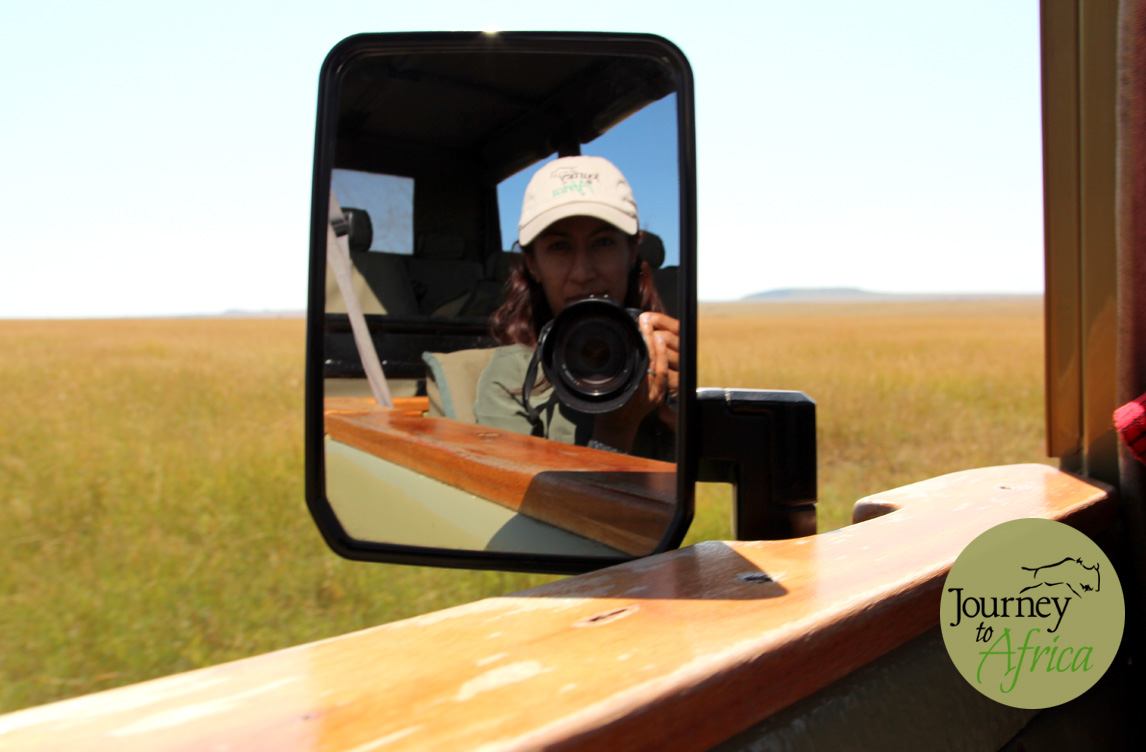
camera

70-300 mm on Safari in Serengeti

I am a hobbyist photographer. I shoot mostly in auto and play a bit with the custom settings. I love good pictures but the weight of the lens and length size is a factor. I am going to suggest what I am taking on my upcoming Safari.

Another thing that I have learnt in the many years of going on a Safari. Rent. Camera equipment is expensive. The only time I get the itch to get new lens or camera is when I am heading out for a Safari. I have found a local Houston renter called the Photo Rental Source that I used last time and am going to do so again. They ship around the US. Some other reputable dealers are BorrowLenses and Lens Rental.

In my camera bag, which is my bag-pack with a camera insert, I am going to carry ::
– My old model Canon T3i.  I would like to stick with my body or I may rent the 60D.
– I really enjoyed using the 70 – 300 mm f4-5.6 L IS on my last Safari and I am sticking with the lens. I liked the photographs I got with this camera. The other option I was considering is the 100 – 400 mm f4-5.6 L but I am going to be doing some walking in Ruaha and Selous and this lens is a heavy. I hope I don’t regret it since I am starting to like birding and this is a birder favorite. I know most pros like prime lens. Love what they get with those large lens.
– For taking pictures of the lodges that I need to review and when I did my walking in Serengeti, I enjoyed using the 24-105 mm f4 IS. It was easy on my back for the whole day walking. I know pros go between this and the 24-70 mm f2.8.
– My Canon Powershot p95 was a good little one for tight squeezes like when I was co-piloting.
– And the iphone 5s – always handy.

My accessories ::
– Camera cleaning kits. A good cleanup end of the day is a good idea.
– Battery charger.
– Converter for the prongs. Most of the chargers are 110-240 V but the prongs vary.
– 2-3 batteries. Our vehicles have charging stations which makes it easy to always have a spare ready.  Evenings at the lodges are also a good time to recharge.
– 2 -3 memory cards. Adjust size and quantity depending on your length of Safari and how much you like to take. Normally you average 400-600 per day. Make sure you get a fast speed card. Nothing more frustration then taking an action shot and your card has to ‘think’.

That should be it. I hope this gives you a starting guideline on camera and lens gear for your Safari with Journey To Africa. Happiness is being on Safari.

I can’t wait to share pictures on the blog from my upcoming Safari.

Life worth Elogoxploring. ™
Make memories on your Journey To Africa Safari.

Get in Touch //
Email us – Safari@JourneyToAfrica.com
Toll Free – 1.877.558.6288
Outside of US – 1.713.592.6228
Fill out a simple form – Request Information

What to pack on your Safari?

The excitement of my Safari is mounting.  The say that the anticipation phase of a trip is just as exciting as the actual adventure. I agree.

fireplaceI can’t wait to sit by the fire-place in the evening enjoying the almost full moon and stars with Paul or my client Sally and go over our day.

It does get cooler during the evenings even if the day is hot. A fleece or sweater is a good idea. A more heavy one is needed during the cold months.  Last time in June, it was quite chilly during the day time so I had long pants. Paul emailed to say it will be ‘hot and beautiful in Natron’. I plan on taking shorts on this Safari. There will be lots of walking on this Safari. Closed toe shoes for sure.

I am trying to keep it to a carry-on as I will be doing a lot of local flying. I am restricted to 33 lbs of weight plus my weight limit on KLM is 26 lbs for carry-on. I am taking a soft bag [they need to squeeze bags sometimes in the luggage compartment in the small flying taxis] that I have used for years and don’t worry when it comes with extra scratches or dust.

Clothing items I plan on taking on this Safari.
– A warm sweater or fleece for evening. I love this fleece cardigan from Nordstrom.
– 2 pants and 2 shirts for the evenings time that will stay clean. Mix and match is the way to go. Ladies, sneak in a light necklace for instant glam.
– Scarfs. I have one for evenings and one light one for day time. The vehicles tend to be dusty so keeping them separate is a good idea. The scarf can be used as a mask again dust, protecting your neck from the sun and those times you need a wipe.  Putting on a clean one in the evening feels good and instantly dresses you up.
– 2 shorts and 2 hiking pants with 3-4 t-shirts for the day time.
– My closed-toe shoes. I used privo clarks to walk in Serengeti for a whole day and my feet were happy. I may just wear this on the plane as well.
–  Sandals. I have my Birkenstock which I like. A good idea to pack for the comfort in your tent or even on a game drive where there is no walking.
– Wind-jacket. Highly recommend this especially since a lot of the vehicles on Safari are open. The morning and evening wind does get chilly. And when in Serengeti, there was the unexpected rain. I was prepared.
– Sun hat of course.
– Undergarments preferable quick dry ones so you can wash overnight. In most of the lodges, they will provide soap to wash but taking a small laundry bar may be a good idea. This is a good brand as it is environment friendly.

One thing to note is that most lodges we recommend have laundry included or there is a nominal fee for laundry. Take advantage of this service.

Guys, there are a few modification you would need to make but you get the idea of what is necessary.

Personal items:
– Hand wipes. For those times when you have to eat lunch after your game drive and you need to wipe off the dust. Dispose them off properly in the camp.
– I usually take face wipes. Saves on liquid worry at the airport as well as a water savers.
– Shampoo + conditioner travel size. Though I have to say, I used the lodge provided shampoo + conditioner the past couple of Safaris and my hair and I survived. I may skip this again.
– SPF 50+ is a must on Safari.
– Hat.  We do give you a Journey To Africa baseball cap on arrival.
– Flash light. In the middle of the night, should you need to go to the enclosed rest room, this may come in handy as most tented lodges turn off lights after a certain time.
– Mosquito repellant wipes. I got this tip from Susan of the Insatiable Traveler.
– Ladies, umhh, I have used these pee directors and can vouch for them. Enough said.
– Medical first-aid kit. Take your prescriptions as carry-on. A must!! Then you have band-aid, neosporin, cortisone cream, immodium [you never know], Advil or Tylenol. This is just a sample.
– Contact wearers, there is dust on Safari. But, I prefer my contacts over recommended glasses. What to do? I always wear my big sunglasses. They usually help. But I always have my glasses as back-up. I take extra contacts in case I need to put on a fresh pair mid-day. Remember to clean your hands first.
– For those who need a little make-up to feel put together, go ahead, take a small pouch. If you feel good, you enjoy more. Keep strong perfumes/colognes at home. An insect magnet.

Self Image

My trusty hat and wind jacket

And then if you forget anything, you can always buy in Tanzania in the towns before you head on Safari [except prescriptions please], re-wear as no one is really looking or ask the lodges if they can help.

The most important packing tip – your sense of adventure! 

Camera gear next.
Looking at binoculars as well. I always use the guides but this time I am thinking I need to get one of my own especially since I am going with Paul who is an avid birder. I don’t think he will be willing to share with me.

Life worth Elogoxploring. ™
Make memories on your Journey To Africa Safari.

Get in Touch //
Email us – Safari@JourneyToAfrica.com
Toll Free – 1.877.558.6288
Outside of US – 1.713.592.6228
Fill out a simple form – Request Information
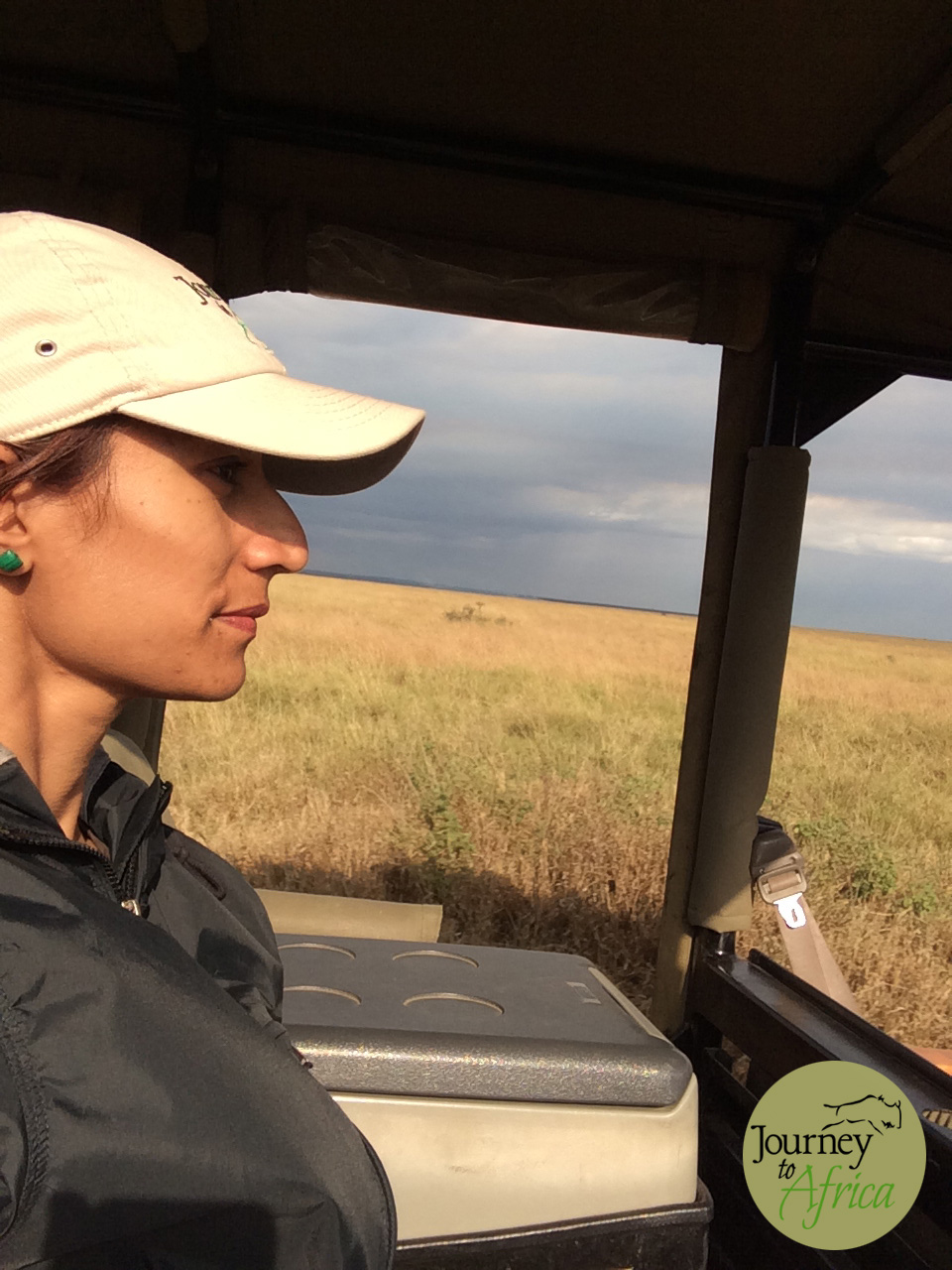
My Safari 2015

My 2015 intentions were to enjoy more adventures.  Well, I am heading back to Tanzania and expanding my knowledge base. There is still so much to explore in lovely Tanzania. My Safari adventure will never stop.

On this Safari, I head first to my base in Northern Tanzania before I venture to Southern Tanzania.

lake_natron

Lake Natron

My first Safari stop will be Lake Natron.  I have passed through Lake Natron so many times when flying to Serengeti. I am excited to be on the ground in this remote landscape. I am heading here with elite guide Paul Oliver.

I have known Paul for 14 + years. He has given me lots of advise over the years with Journey To Africa. I also started using Oliver’s Camp in Tarangire when it was run by him and Tati back in the early 2000. When it was run by Paul, it was a rustic little camp but having Paul and Tati share stories  by the campfire in the evening was priceless.

Being with Paul to wild Lake Natron should be an adventure. The rough roads, the dry, hot and humid conditions for walking, flamingo filled soda ash lake, off the beaten path encounters with the Maasai tribe, the amazing views of Ol Doinyo Lengai … I hope to come back with wild stories to share.

I will be spending two nights at Lake Natron Camp, an eco-friendly camp run by Ake Lindstrom, a Mt. Kilimanjaro climbing expert who has been on the mountain around 50 times.

Ruaha-National-Park-Guide-Walking-Safari-Elephants-Paul-Joynson-Hicks-MR

Walking in Ruaha

Then off to Ruaha National Park, the largest National Park in Tanzania. Ruaha has been everywhere in the travel news lately. Conde Nest, National Geographic to CN Traveller and more. Why I think? Daily flights, more luxury camps within the park boundaries and expert guiding both by vehicle and on foot is a major draw to this park.

I really enjoyed my Serengeti walking Safari and I am excited to be trying it out in Ruaha. I hope to see large buffalo herds, elephants, lots of cats and because I am going in March, birds should be plentiful. In March, the park is going to be lush, the green season, as opposed to yellow season which is from July to October.

I am also excited to explore Ruaha with my client Sally. Sally has been on two Safaris to Northern Tanzania with Journey To Africa. She is taking a group for an amazing Safari to Selous Game Reserve, Ruaha, Mahale Mountains and stunning Greystoke Camp, Tarangire and Serengeti in 2016. I know!

When I told her I am going to explore Ruaha and Selous, she jumped on board to come on a quick get-away. To say she loves being on Safari in Tanzania is an understatement.

sand river

Sand River Selous

Sally and I will head to Selous Game Reserve, my final stop on this Safari. I have waited 10 + years to get to this game reserve. It has a lot of elements that would be a perfect combination to Northern Tanzania. Boating on the Rufiji River and it’s tributaries and the many lakes, fishing on the boat or the shores, lots more walking Safari and generally a slower pace of Safari.

From what my colleagues tell me, being in Selous means relaxing by the river and casual game drives as it is not all about the wildlife concentration of Northern Tanzania. A good extension to Northern Tanzania maybe or for the seasoned Tanzania Safari goer. I shall find out.

In Selous, I will be heading to Sand River Selous and then to Beho Beho Camp. Sand River Selous is a sister camp to Lamai Serengeti, one of my favorite camps in Northern Serengeti. Beho Beho Camp is by a lake and is known for its great walking guides and treehouse.

Want to see what I see? Follow me on Instagram. I will post Safari pictures from Tanzania whenever I have access. 

Next up, preparations for my Safari. What to pack on Safari? I am doing only carry-on. What camera and lens to take? I have some suggestions coming up. Leave a comment if you have any.

Want to join me next time? We can plan ahead for a Safari in 2016.

logo
Life worth Exploring. ™

Make memories on your Journey To Africa Safari.

Get in Touch //
Email us – Safari@JourneyToAfrica.com
Toll Free – 1.877.558.6288
Outside of US – 1.713.592.6228
Form – Request Information

Experiences. They last forever.

Happy New Year. 

2015_experiences2014 was a year for Family Safari and new experiences for us at Journey To Africa.

We spent time exploring TarangireNgorongoro and Zanzibar Island with our children in Tanzania. Going with children on a Safari makes you go slower and appreciate the little things. We had a wonderful time together. I flew to amazing Serengeti and got to experience a Walking Safari in our private area with Richard – what a fantastic time.

We are thankful for our clients who came back from Safari and let us know that the physical and mental experience of being on Safari was something they could not have imagined.

We are thankful they trusted us for a great Safari experience. The introduction to unparalleled diverse wildlife, the varied and vast landscape, the warm people, the necessary and important conservation efforts, the fun bush breakfast , cultural interactions, and much more.

For all, a piece of their heart and soul remains on Safari.

2014 is ending and like always it seems time has gone by too fast.  Don’t wait to experience the magic of being on a Safari.

We look forward to making your Safari experiences come true in 2015 and beyond.

Here’s to a soaring 2015.

logo
Life worth Exploring. ™
Make memories on your Journey To Africa Safari.

Get in Touch //
Email us – Safari@JourneyToAfrica.com
Toll Free – 1.877.558.6288
Outside of US – 1.713.592.6228
Form – Request Information

Meru House – Safari Diary 2014

When I was in Arusha, my friend Tati of Tanzania Women’s Maasai Art told me I must visit Meru House as an option for Journey To Africa clients spending a night or two in Arusha. Tati used to run Oliver’s Camp when it was a really rustic camp with my friend and professional guide Paul Oliver from 1990s to early 2000. She has good taste. The camps she has run [in Tanzania and Botswana] were well run, simple yet elegant and it continues in her work with Maasai bead jewelry.

Tati and I went to have lunch with Sandra Decussrow of Meru House. The minute I entered the gates, it felt so inviting. It is afterall a home converted into a cozy lodge. You have to drive through a coffee plantation to get to the boutique inn and once you enter, you are welcomed by the lovely garden.

meru_house_lounge

The inviting living room

meru_house_dining_pool

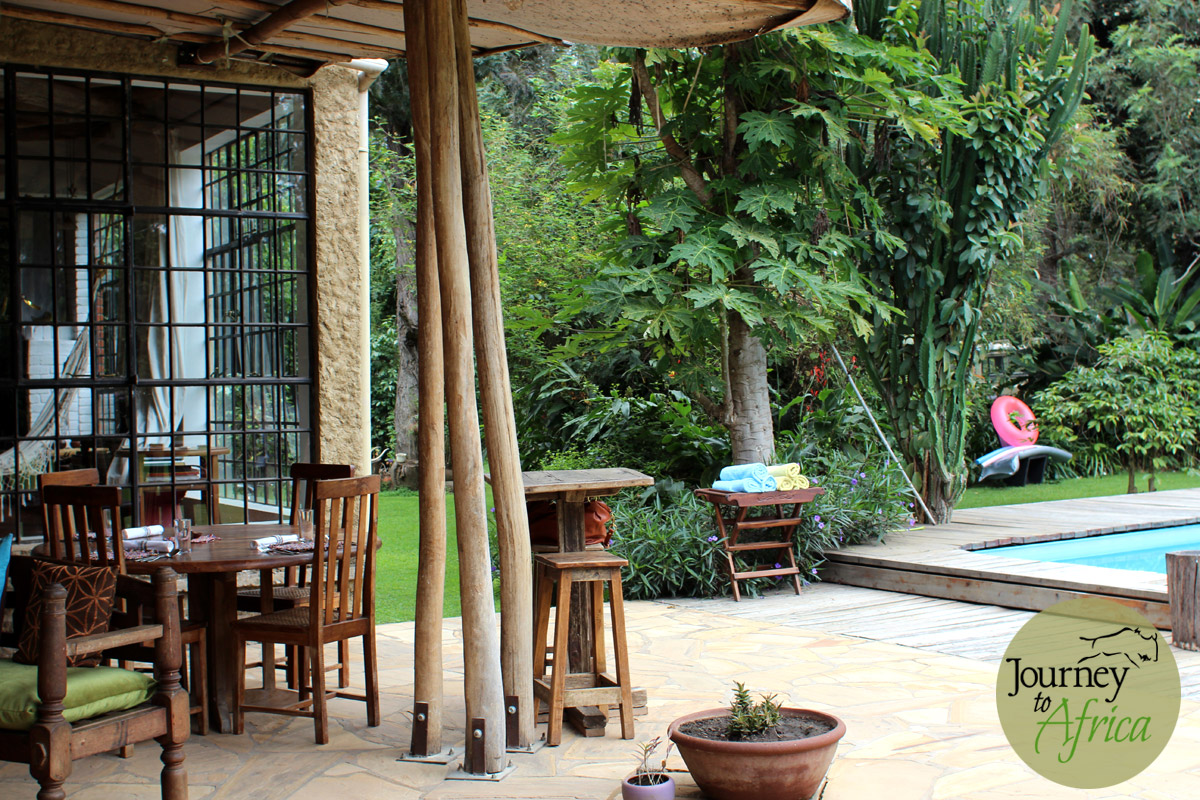
The outdoor area

meru_house_blue_room

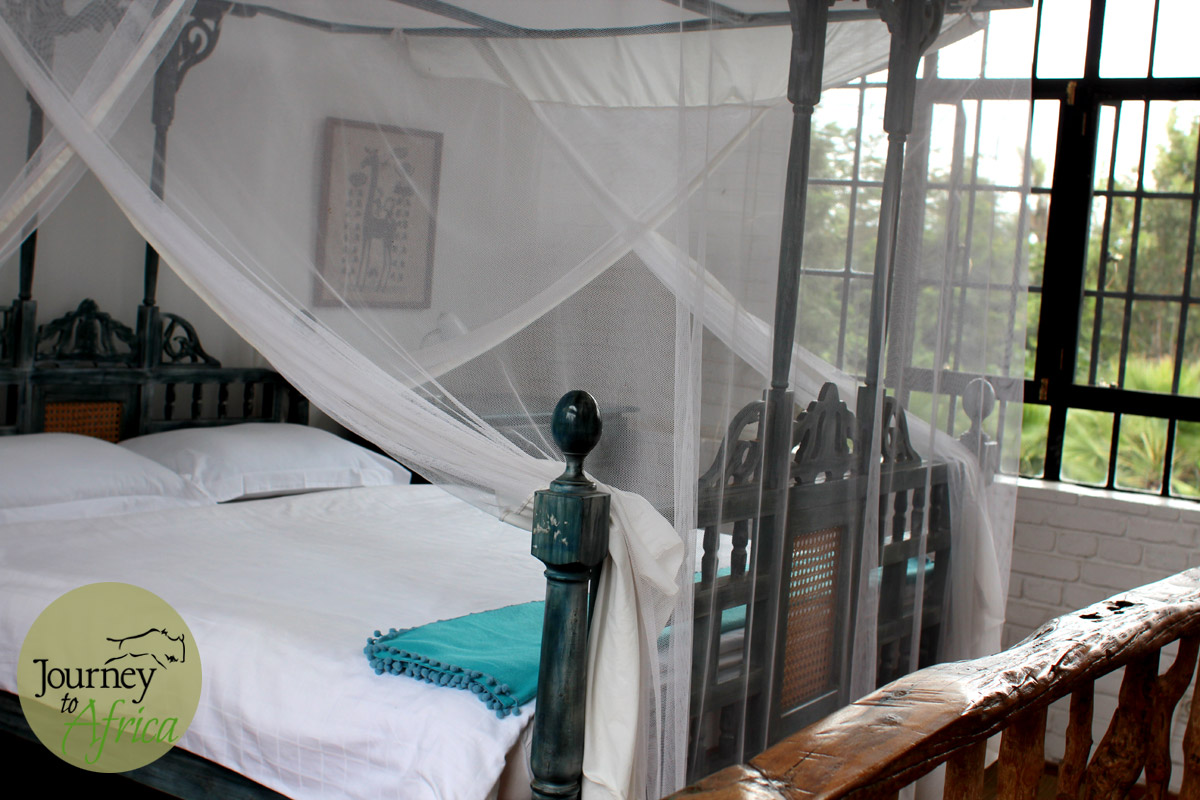
Cozy bedrooms. This one is the loft room perfect for couples.


meru_bath

Bathroom details

When you enter the house, you can see the inviting living room with a fire-place on the left and the inside dining room that seats about 10 people family style on the right. The large beautiful door in the front leads you to the outdoor dining / coffee + tea area / resting spot in large couches overlooking the gardens and the lap pool.

Each room is well decorated with all the comforts of home. A lovely bathroom and a comfy bed in a pleasing palate. A family would really benefit from having two rooms close by with a connecting bathroom. The kids room still retains Sandra’s sons book collection. The views from the large windows are of the garden, the lap pool or the coffee plantation.

meru_coffee

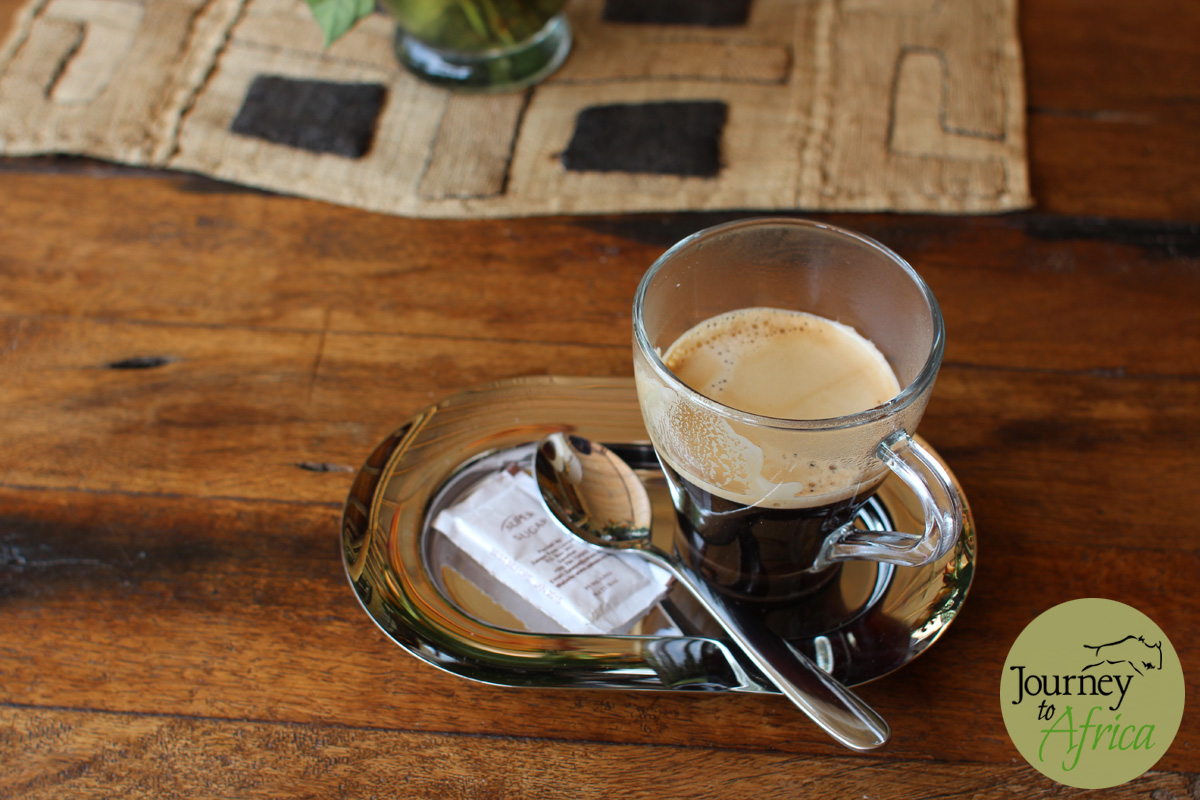
Delicious Tanzanian Coffee grown in their own plantations

The food! Delicious. I was there for lunch and we had a delicious butternut squash soup to warm us up on a cold day and a lovely garden salad. To finish off, coffee from their own Msumbi farm.

meru_sandra

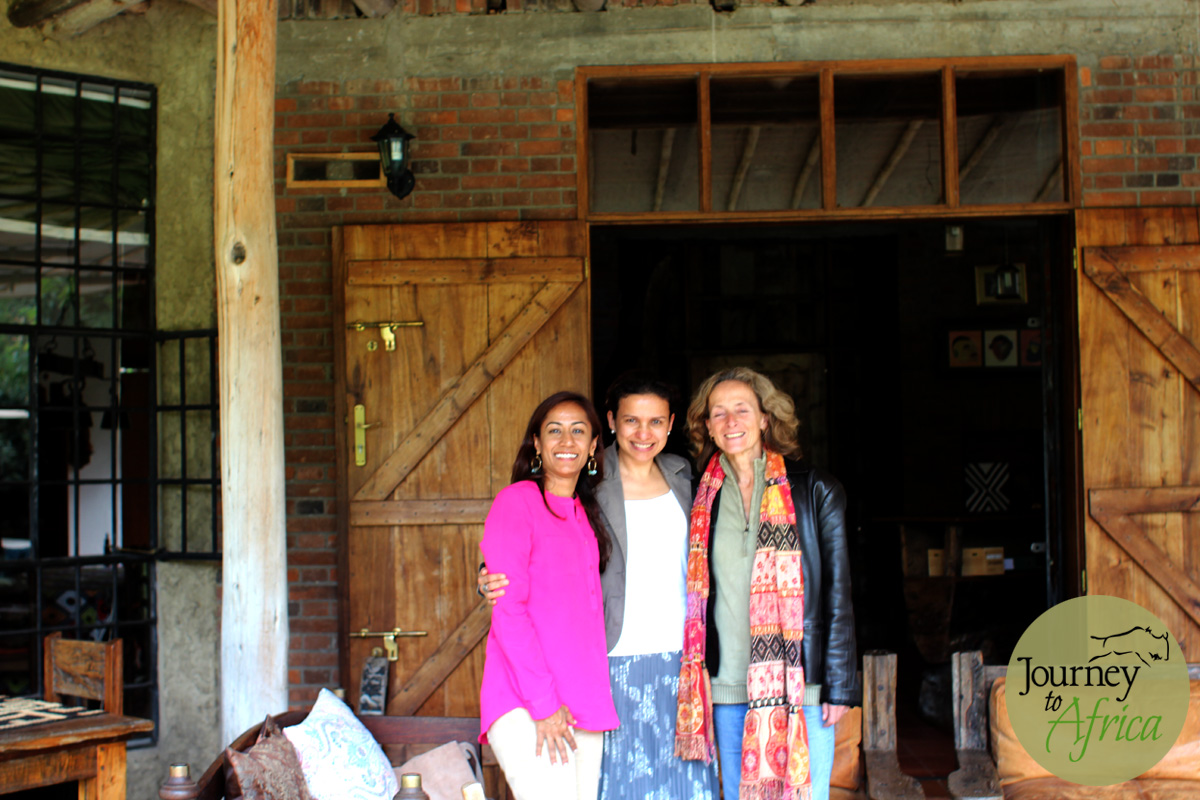
Me, Sandra and my friend Tati

Meru House is a great cozy place to overnight for a night or two on arrival into Tanzania before you head out on Safari or after a Mt. Kilimanjaro climb.

logo
Life worth Exploring. ™
Make memories on your Journey To Africa Safari.

Get in Touch //
Email us – Safari@JourneyToAfrica.com
Toll Free – 1.877.558.6288
Outside of US – 1.713.592.6228
Form – Request Information


Keep Calm and Swat Away!

TseTesThis is Richard, my guide on my exhilarating Walking Safari in our private area in Serengeti. He has company – Tsetse flies. I had their company as well … I was right behind him and took this shot.

When on Safari in Tanzania and Kenya, there are areas in the parks and conservation areas where you just can not avoid these pesky flies. We are talking amazing areas like Northern and Central Serengeti and Tarangire National Park.  Rivers, bushes, woody areas are were you find them. Not going there would be such a shame.

You can do a few things to help yourself.

Wear light-colored clothing.
These buggers are attracted to dark colors. Avoid dark blue and black clothing on Safari. You will notice cloths with this color hanging from trees in various areas, put there by the park officials, in hopes that these flies will be hanging out on the cloth instead of on you.

Try loose clothing.
Create a barrier between the fly and your skin. This is the best protection. And will keep you cool when hot. Win-Win.

Fly swatter.
Some clients have brought these swatter and it has helped them but you have to be really fast. They come in droves and are quick to nip.  You have to Keep Calm and Swat Away. You will feel accomplished when you get a few.

Anti-itch cream.
Okay so let’s be realistic here. Chances of getting bitten are there. You can put some anti-itch cream right away and it will help with the itch. And try not to scratch the sweet itch as you are in risk of getting a gash – personal experience here. Ouch.

Tsetse flies do carry the disease sleeping sickness but the chances of getting the sickness is very rare. If you exhibit high fever for days and it is not Malaria, let your hospital/ doctor [with help from infectious disease] know you have been in areas with Tsetse flies.

The silver lining here is that these flies keep the cows and humans away from the wildlife zones. They don’t seem to bother wildlife which means more areas for the wildlife to roam and slow down of human encroachment. We are talking about the Maasai tribe who live on the periphery of the parks with their cow herds and farmers with their machines. Stay back!

Keep Calm and Swat Away. Happiness is being on Safari … even with pesky Tsetse flies.

logo

Life worth Exploring. ™
Make memories on your Journey To Africa Safari.

Get in Touch //
Email us – Safari@JourneyToAfrica.com
Toll Free – 1.877.558.6288 
Outside of US – 1.713.592.6228
Form – Request Information


What is a Luxury Safari?

Luxury is relative to each one of us. Is it having 300+ thread counts in our beds or would using a wilderness tent [small dome tent with a sleeping cot] be okay with you if it means enjoying walking in our private area in Serengeti? The best bottle of wine with gourmet meals? Are you going to be happy with perfectly good 5 gallon bucket shower or do you need endless water and a bubble tub? We want to know more about your expectations on Safari.

sunset_one
How do we define luxury Safaris? 

Here are our 4 thoughts. The minimum expectation you are guaranteed when enjoying our Safaris in Tanzania, Kenya and beyond.

1] Peace of Mind.
Our Safaris take care of you from arrival into Kilimanjaro Airport or Jomo Kenyatta Airport  to when we drop you off at the airport for your flight home. “Safaris are like grandmothers” – Susan Portnoy, a photographer mentioned. All the care with the warm and fuzzy.

We will book your Safari lodges and take care of all the in-between. Your park fees and conservation fees.  All meals and snacks on Safari are arranged. Our well maintained closed or open vehicle will have bottled water and soft drink as well as plugs to charge camera batteries, phones and other electronics so you don’t have to wait until the evening when you go to the lodge. Local flights will be booked. Transfers will be arranged – someone will pick you up and drop you off. And much more.

What we insist you must do is sit back and relax! You are on Safari.

2] Experiences and Great Memories.
Many studies
show that happy people are those who have accumulated experiences and memories in their lives. We aim to enhance your happiness.

“Travel is my therapy”

How do we plan on doing that?

– Via our guides and their knowledge, warmth, patience and more. To our first time on Journey To Africa Safari goers to our fifth time client, our guides are our backbone. They help make great memories and experiences on your Safari. They are also our ambassadors.

– Adding details to your Safari.  We don’t want to give away too much of what we do here but it’s the little things that make the big things happen.

food for Safari - sundowners - Oliver's Camp

3] Ambiance.
Trust us! You will not go hungry on your Safari. Three meals cooked with the basic of tools and snacks – we are talking cakes and cookies and nuts –  at any time. And the abundance of good coffee and tea.

But the best luxurious part is that the settings will be amazing. You may have breakfast in the middle of park, lunch overlooking the Serengeti, Tarangire River or Hippo pool in Ngorongoro, have picnic under the accacia tree and spot elephants roaming in a distance. And dinner under the stars with candlelight sharing stories with your camp manager and other Safari goers while hearing the hyenas, wildebeest or lions in the distance.  Different from how you enjoy your food at home. Luxury.

Food evokes memories and after a Safari, you will bring home lots of those.

dinner ambiance

4] Lodges with a Soul.
Our criteria when choosing the lodges we recommend is that they have to have the 3 Cs. Conservation + Community + Carbon off-setting ethos.

Your dollars help out in a lot of behind the scenes effort.  Now that is luxury to us. The ability to assist the visiting country, it’s people and the precious wildlife.

Whether it is wildlife conservation via Honeyguide Foundation with our Asilia Africa lodges like Olakira Camp or supporting a sustainable orphanage by building a fully equipped bakery like Rhotia Valley Tented Lodge or off setting carbon footprints like our walking Safari partners.

Our lodges also support a lot of families. 1 staff member in our lodge will take care of 4-6 + family members at home. Ask us for more details on each organization should you be interested.

packforapurpose

We hope you will join us on a Luxury Safari.

logo

Life worth Exploring. ™
Make memories on your Journey To Africa Safari.

Get in touch //
Email – Safari@JourneyToAfrica.com
Call – 1.877.558.6288 / 713.592.6228 [outside US]
Form – Request Information


Ebola and Safari in Tanzania and Kenya

Namiri_Camp_Ebola_Story

Enjoy waking up on Safari from Namiri Plains in Central Serengeti, Tanzania

Ebola has been in the news a lot lately. It is a terrible disease that has plagued West Africa. The good news for those heading to, in, or planning to head to Tanzania and Kenya on a Safari – we are 3,300 miles away.  The distance of Orlando, FL and Juno, Alaska.

The virus has not been detected in Kenya or Tanzania. The airport officials are on a look out with anyone coming in that look like they have a symptom. Thermometers and thermal scanners have been brought in for detection in some airport. They would be immediately quarantined. No one has been quarantined yet in Tanzania and Kenya. Kenya and other countries with airlines are so cautious that they have stopped flights.

Talking about flights, it is not transmitted via air.  You would need to handshake a person with Ebola to contact this terrible disease.

Should a sick individual even have a ticket to travel from West Africa, they will not be able to travel as they will be too sick. And may not even be able to get on board.

So, don’t change your Safari plans. If you are planning a Safari to Tanzania and Kenya, don’t let Ebola stop you.  There are some great Safari deals right now for both Tanzania and Kenya to take advantage.

logo


Life worth Exploring! ™
Make memories on your Journey To Africa Safari.

Get in touch //
Email – Safari@JourneyToAfrica.com
Toll Free – 877.558.6288
Outside US –  713.592.6228
Form – Request Information

Photo of the week – Butterfly

butterfly_2

Butterfly

Butterflies are so beautiful. But oh so hard to capture with my 24-105 mm L Canon lens on my Tanzania Safari. They come in so many different colors, sizes, textures, shapes, etc.  And they have some lovely names like white pansy and emperor. So fun to watch these pretty little flying creatures.

On my Walking Safari in Private Serengeti, I had the chance to capture a few a shots as I had the advantage of going slow.  My guide Richard and ranger Deo all got into it with me and helped me track down butterflies. This is one of my best captures. Look at that beauty. Anyone know the name of this butterfly species?

Wildlife photographer Russell MacLaughlin recently had one of this photos on Africa Geographic Twitter feed and I commented on how I had difficultly capturing these beauties and he replied, ‘not easy at all”.  The quest to capture these beauty continues.

Life worth Exploring! ™ Make memories on your Journey To Africa Safari.

Get in touch //
Email – Safari@JourneyToAfrica.com
Call – 1.877.558.6288 / 713.592.6228 [outside US]
Form – Request Information

Photo of the week – Southern Ground Hornbill

Northern_Serengeti_3

Watch out! I am landing.

Birds! Birds! Who knew each one had so much personality. My fifth reason for loving Serengeti.

This pair of Southern Ground Hornbill was spotted in Northern Serengeti. These large birds are ground feeders and feed on snakes, tortoise, frogs, lizards and such. The group which consists of up to 11 hornbills are very vocal. Some even go far as saying lion-like.

The elder Southern Ground Hornbill tend to help the inexperienced young breed [co-breeders].  The couple, usually monogamous, will lay about 2-3 eggs every 9 years or so. 1 egg will usually survive. The male will tend the nest with eggs which they build on tree cavities.  Team working birds! The group work together to tend the young.

Life worth Exploring! ™ Make memories on your Journey To Africa Safari.

Get in touch //
Email – Safari@JourneyToAfrica.com
Call – 1.877.558.6288 / 713.592.6228 [outside US]
Form – Request Information