
My Serengeti map drawn by my 5 yr old son.
Safari planning / dreaming in full swing here.
Twende – let’s go!

My Serengeti map drawn by my 5 yr old son.
Safari planning / dreaming in full swing here.
Twende – let’s go!
Planning for the Safari is done. Now, the packing fun begins.
For my camera gear, I am renting a 70-300 f4-5.6 L from Houston Photo Rental for my Canon T3i. I will have about two 32GB cards, flash, my laptop to download the pictures at night and get some work done where wi-fi is available. June is going to be a cooler month [70-50F range] so more long sleeves and pants. Since I am walking in Serengeti [terribly excited] trekking shoes are a must. Can not forget SPF, hat, sunblock and my trusty scarf.
What else? School supplies. A lot of lodges that we partner with are members of this great organization called Pack for a Purpose. They work with the lodges around the world, identifying what they need for their community school and ask us tour operators to let our clients know what they can bring – 5 lbs of supplies or whatever you are comfortable carrying.
Lodges on they are currently partnered with that we will be stopping by :
– Onsea House in Arusha
– Gibbs Farm in beautiful Karatu Region
– Rhotia Valley right outside Ngorongoro Gate
– Sayari Camp – we will pass our supplies to this lovely camp on our way to Olakira Camp
– Ras Nungwi Beach Resort in Zanzibar Island
– Chem Chem Safari between Lake Manyara and Tarangire National Park
Looking forward to making someone’s day when in Tanzania.
Life Worth Exploring!

Pre-primary kids playing at Rhotia Valley Tented Camp
[picture taken by Rhotia Valley]
Part of what makes our clients trust using Journey To Africa for their Safari is that we know Tanzania and Masai Mara.
You ask. Why two nights in Oliver’s Camp? Because we know that the distance from the park gate to the lodge deep inside Tarangire National Park is about 3-4 hours and you are sure to make lots of stops along the way for wildlife viewing. Two night will give you time to enjoy Silale Swamps and the surronding areas.
You say. Why should I spend extra money and head to Northern Serengeti in August and enjoy Lamai Serengeti or Sayari Camp? Because we know you will enjoy the Mara River crossing that may happen, the off-roading, the sundowners close to Masai Mara. And wait until you see the showers and the views from these beautiful camps.
You inquire. What is special about your Safari vehicles? We find out if they have added any new variety of cookies and drinks. No, really. We want to know besides what we already offer [charging outlet, open or pop-up roof, blankets, ice cooler with drinks, snacks, thermos coffee maybe], what extra will you get.
You decide. Our guides is a big reason you are going on a Journey To Africa Safari! We catch up over coffee and hear advise, stories, suggestions, and learn more about them. We will be leaving you in very capable hands.
And so much more. So much fun heading back to Tanzania and on Safari again.
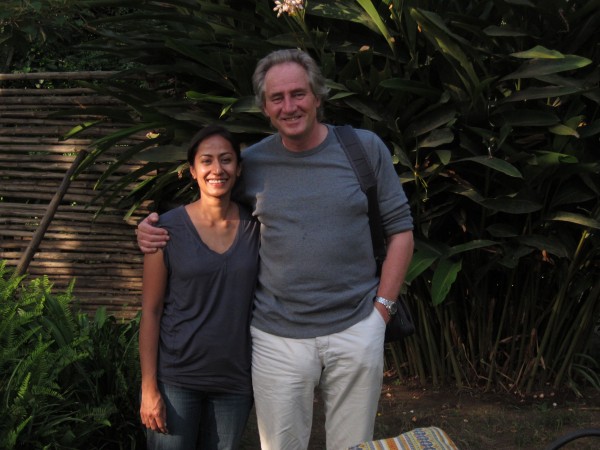 Our friend professional guide Paul Oliver who has been leading Safaris for over 20+ years
This is where we will be visiting on this Safari. Some new lodges + camps and resorts and some just because we can’t wait to go back.
~ Chem Chem ~ Gibbs Farm ~ Rhotia Valley ~ Lemala Ngorongoro ~Lamai Serengeti ~ Olakira Mara ~ Dunia Camp ~ Kati Kati Tented Camp ~ Mobile Camp when walking in the Serengeti ~ Jafferji House ~ Matemwe Lodge ~ Ras Nungwi.
Maybe a few more will be added along the way.

Sayari Camp bathroom
Keep in touch with us.
Follow us on instagram.- http://instagram.com/journeytoafrica
When on your Journey To Africa Safari, you are going to enjoy game driving for at least 6-8 hours a day, sometimes more, sometimes less and you get to choose. You may start early around 6:00 a.m. and end as late at 6:30 to 7:00 p.m. when the parks close. You may even go out at night on your night game drives from certain lodges.
During this time, you learn to appreciate your work-horse of a vehicle. Your 4×4 vehicle expertly maneuvered by our experienced knowledgable guide/ friend is your safe house from the elements.
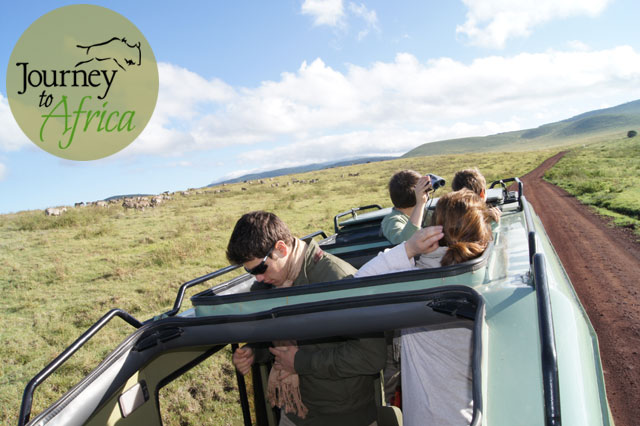
Katsaros Family on a Journey To Africa Safari in Ngorongoro Crater
Your vehicle will pass through dusty and bumpy roads, narrow bridges and overflowing bridges, slippery muddy and sticky mud [black cotton soil], and more all the while you are enjoying your wildlife and magnificent scenery. Your vehicle will keep you dry from the rains, warm from the winds or shade you from the hot sun. Your vehicle will have its roof open so you can have a panoramic view of the amazing landscape.
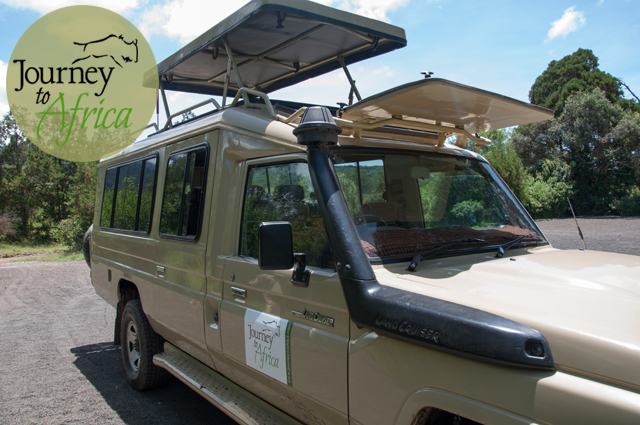
Taken by Journey To Africa client Zack M
Sometimes your vehicle depending on the area of your Safari will be an open vehicle. This usually happens when you fly into a location and do not have to transfer on the main roads.

Open vehicle used by Olakira and Sayari Camp in Northern Serengeti
Regardless of what type of vehicle, your vehicle when on a Journey To Africa Safari will have a cooler with water, soft drinks, plug to charge your spare camera batteries, bean bag, binoculars, lots of guide books, snacks – you do get hungry on Safari, blankets to keep you warm from the wind, and raincoat. If you have any special requests, we can cater to that as well.
All in all, your vehicle with our professional guides will be ready to show you a great time on Safari with Journey To Africa.
Get in touch via email – Safari@JourneyToAfrica.com
Call us at 1.877.558.6288 or 713.592.6228.
Together, we can plan your Safari for the memory books.
Life worth Exploring. ™
When planning your Journey To Africa Safari, we usually like using lodges where we have overnighted, spent time with the manager or owner, enjoyed a meal or coffee / tea with some cookies and pastry, seen what they offer for activities or entertainment + more – we want to be able to tell you about the lodge first hand.

Plantation Lodge.
Owned and operated by Renate and Udo Marahens, the lodge is located in Karatu Region about 20 minutes away from Ngorongoro Crater gate. This lovely lodge was first visited on our research Safari in year 2000. It was in its early stages of operation. Renate and Udo had recently opened Plantation Lodge after having successful managed Rhino Lodge also in Karatu. Our last visit was in October 2009 – we can not wait to go back to Plantation Lodge.
My relationship with the Marahens goes a long way back when living in Arusha. They were coffee farmers in the 80s and they would come to get supplies from Tanganyika Farmer’s Association, a company where my father worked. They had been based in the Karatu Region long before Tanzanian tourism started taking off with more lodges and better infrastructure.

Why Plantation Lodge?
Plantation Lodge offers excellent food with most of the produce grown locally in their garden near the lodge. Spend time in the large well decorated wine cellar with a glass of wine, beer and other drinks from all over the world but mostly from Southern Africa. Enjoy their coffee locally roasted in Karatu- one of the best coffee producing regions in my opinion. Lunch can be enjoyed outside in the beautiful gardens and dinner in served in the large dining area or enjoy a private dinner outside in the patio.

The lodge grounds are amazing. The lush garden with Arabica coffee bushes overlooking the Ngorongoro Highlands or the nearby farms, a large avocado tree that produces avocados the size of a football – American football, the eucalyptus and jacaranda trees providing lovely shade during the hot days, an array of beautiful flowers from iris to bougainvillea and frangipani well maintained by gardeners with green thumbs. Enjoy the orchestra of many bird species serenading you when you are outside enjoying your coffee, taking notes on your Safari or inside the lounge area having fresh baked cakes or sipping tea as the windows are always open.
Talking about coffee, ask them to take you on a tour of the local coffee farm and see the very beginning steps of how your favorite cup of coffee gets produced.
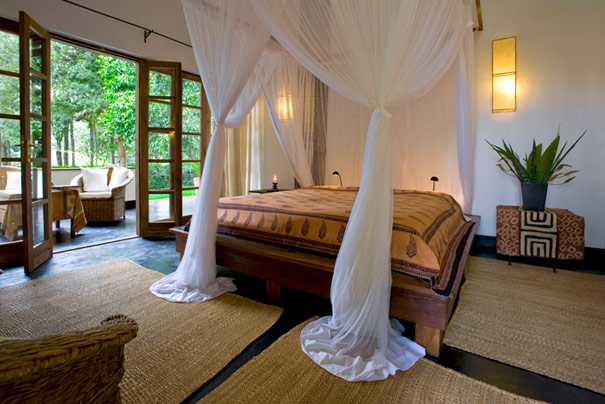
The rooms are spacious [even the non-suite], tastefully simplistically decorated with flowers and personal touches and with balconies where you can enjoy the beautiful garden and the views out in the horizon. They also have a family suite with two rooms and a Garden House which has four rooms, perfect for large families or a large group with its own dining area.

They have a pool which can be used during the daytime. During the cool season [April to August], you would have to be brave to dip in the cool pool but during the hot months [September to March], a cool dip may be just the perfect way to end a dusty Safari day or enjoy an afternoon siesta with a good book and enjoy the bird sounds and trees rustling.
As I have mentioned before in my food post, Safari is hard work. Lots of delicious eating you know. Well, you need a massage afterward. In comes the fabulous masseuse Sumaya. Her touch is heavenly. You can choose from a full body massage to foot massage. Book her when you first check-in. You will come out refreshed.
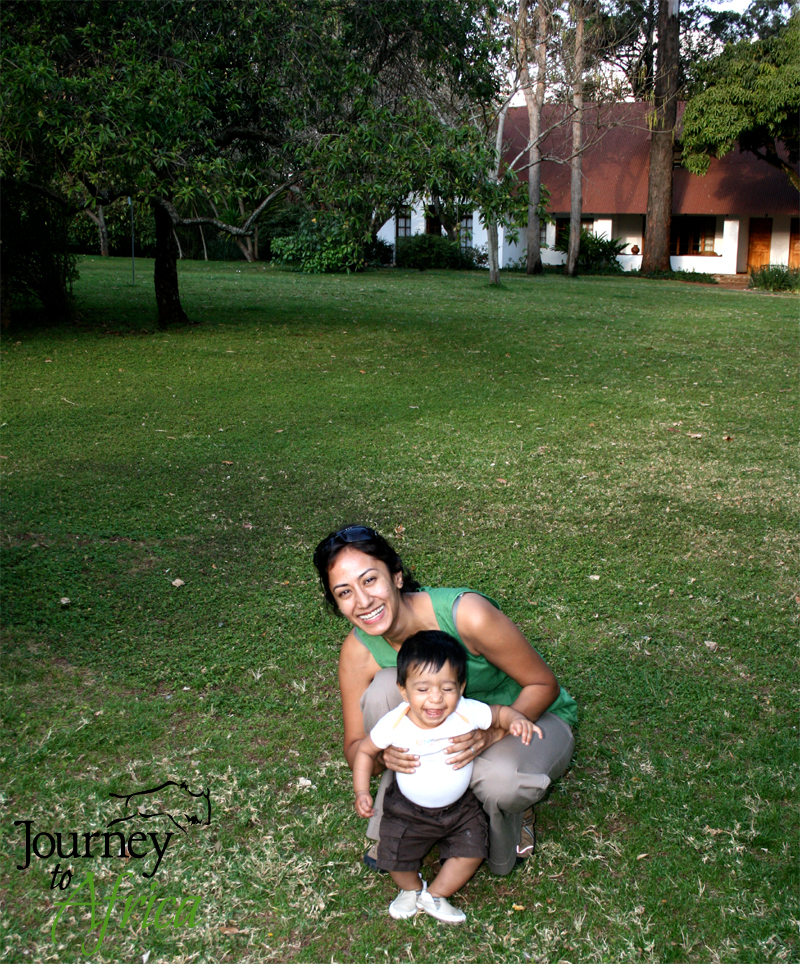
Karibu on a Journey To Africa Safari and enjoy a night, two or more at Plantation Lodge. We definitely have a blast staying here.
Some photos courtesy of Plantation Lodge.
One question that I often get from clients booking their Journey To Africa Safari is what is the food going to be like on Safari? If staying in our preferred camps, I can confidently say ::
But let us talk about the beautiful setting you will get to experience when enjoying your food and snacks on Safari.
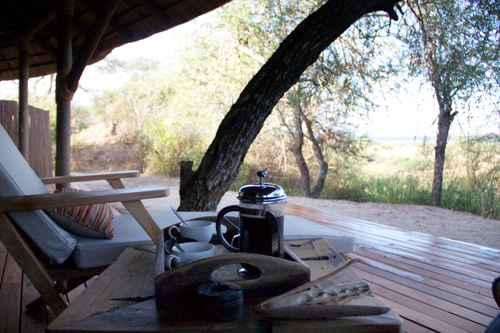
Wake-up coffee and cookie at beautiful Oliver’s Camp
On Safari you normally start off your day with a wake-up call. You can start really early should you have chosen to go on a sunrise morning game drive or morning walking Safari like you can do from Oliver’s Camp. You sit on your lovely patio and have your cookie or biscuits as we say and sip your hot cuppa tea or coffee listening to the sounds of the wild and watching the sun rise. A perfect morning on Safari!

Breakfast from lovely Olakira Camp. An variety of items to choose from or head out for your bush breakfast.
Then on to breakfast. A good breakfast to start off the day full of adventures. You are going to have an array of options. Cereals, variety of juices, eggs with warm bread sometimes cooked in the bush for a bush breakfast, bacon and potatoes and more. Nothing like having the most important meal of the day with a great view as you see here from Olakira Camp in Central Serengeti.

You need a snack in the middle of game driving. With Albert, resident guide at beautiful Sayari Camp in Northern Serengeti.
When on your game drive, you need a snack. Game driving is tough! Our vehicles carry water, soft drinks, juice and snacks which you can enjoy during your game drive. In some areas, like what we are experienced in Northern Serengeti with Sayari Camp guide Albert, you can stop, set a table and enjoy your snack with the animals close by. Don’t worry. Our guides will choose an open area away from the thick bushes. Prepare to enjoy your mid-morning or afternoon snack.
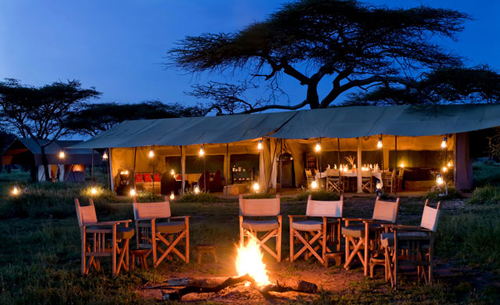
Campfire is a good place to end the day with a good glass of wine or drink of choice.
Dinner time is the most romantic time. Soft flicker of the candles or lanterns invite you to your table. Here you will chill with a glass of wine or the drink of choice while chatting with other Safari goers or share a meal with the camp manager and share stories that go beyond the parks you are visiting. Bush dinners are available for those who want a private dinner or just want to sit under the stars. Bon appetite!
And then tomorrow, the wonderful cycle begins again.

Dinner!
Don’t you want to be on Safari snacking or having a delicious meal right now?
Choose from our many Safari itneraries which we will personalize to your liking.
Karibu Safari with Journey To Africa.
Get in touch //
Email – Safari@JourneyToAfrica.com
Call – 1.877.55.6288
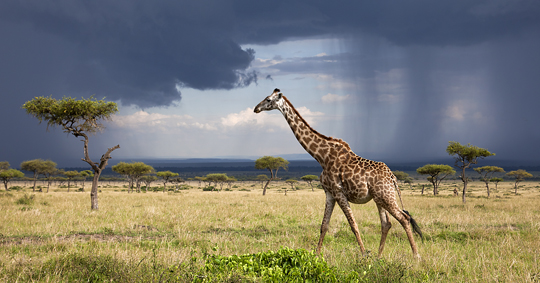
Photograph by Rick Sammon – Masai Mara giraffe
In August 2013, professional photographer Kevin Pepper and internationally recognized photographer Rick Sammon are taking their clients to Tanzania for a photographic Safari – Capture Tanzania by Lens. On this Safari [August 8th to 16th] the group will get to explore amazing Tarangire National Park, dense and captivating Ngorongoro Crater and vast, green and breathtaking Northern Serengeti.
Besides enjoying these National Parks, the group will have Kevin and Rick with them at all times to improve the photography experience. From what setting to use, right aperture to capture the shot, picture composition to getting back to camp in the evening and talking about post processing. Want to join them on Safari? Contact us at Safari@JourneyToAfrica.com.
Kevin is taking a Safari to Tanzania in April to get a taste of Tanzania and I have asked him to talk about cameras and all the other accessories that need to be considered with taking a Photographic Safari. We will follow up with him after he comes back and get his final packing list for his August Photographic Safari with ‘natural light guru’ Rick.
For us photographers its time to make some decisions — what camera equipment do we take with us to get the photos we expect to be taking?
Camera bodies: Take a main body and a spare if you have one. One will suffice… but two is optimal. On my next Safari with Journey to Africa in April of 2013 and then again in August of 2013 I will be taking the Canon 5D MkIII and the Olympus E30.
Lenses: I suggest full coverage from wide angle to telephoto. I will be taking the 11-22mm f2.8-3.5 wide angle, a 14-54mm f2.8-3.5 and a 50-200mm f2.8-3.5 with a 2.0x teleconverter for my Olympus body. For my canon body I will have a Sigma 150-500mm f5-6.3 and a 17-40mm f/4.0L
Flash: An external flash is also a suggestion. Filling in shadows and creating proper lighting indoors and when shooting local tribes people is something a flash will help you with.
Camera Bag: A backpack camera bag is ideal. You’ll want to be able to carry your equipment on to airplanes to avoid theft, so a backpack works best. I will have my gear in a LowePRO protrekker 400 as it will fit both my bodies and lenses in the bag while I am travelling.
Tripod: I am not going to tell you that this is a deal breaker… you can choose to shoot in any light situation you want… but why chance it. I will take a monopod , a beanbag and a light carbon fibre tripod. Chances are you will be using the bean bag most while on safari and when not using it the ISO adjustment will compensate for any low light situations. But for golden hour or blue hour shooting you will be kicking yourself in the butt when you see a scene at low light and you have no way to steady your camera for a couple seconds.
Storage Media: I shoot all my photos in RAW and will take a minimum of 5 media cards for the 7 day trip. Each card will be an 8gig or 16gig Sandisk Extreme CF cards and will hold between 400 and 1000 images on each card. If you are a serious photographer, bring a laptop as well, with software for basic editing. Plus, you may want to invest in some kind of external hd backup system so your photos are kept in two locations.
Other accessories: Take a rain cover for yourself and your camera body if you are going to be there in the rainy season like we sometimes will in the coming years. While rain last for very short periods of time in Tanzania, the down pours are hard.
Batteries and chargers: I have four batteries for each camera body and I will take them all. I will also be taking chargers with the appropriate wall plug to charge my batteries as they drain. You can also buy a solar panel charger from a company called voltaic systems for a couple hundred dollars if you want to go that route.
Filters: I will be taking my entire cokin P series polarizers and ND filters with me when I travel. I also have an assortment of Tiffen filters I use. At some point on your safari you will wish you had the right filter. Harsh light or bright skies and darker foregrounds will definitely have you scurrying to borrow someone’s filter if you do not take your own.
Lens cleaners and cloths: Take cleaners and cloths for both your lenses and sensor (if you know how to clean your sensor) If you are not careful when changing lenses you can easily get dust on your sensor.
Conclusion: But let’s not forget, an African safari is about experiencing a once in a lifetime event… that bucket list trip that will leave you with memories of a lifetime.
So there Safari goers. You have your camera equipment guidelines. Now go on Safari with Kevin and Rick and come back with loads of your own photographs and memories! Karibu Tanzania!
That is so true. When you and I talk about planning your Safari, we talk about all the details from number of days you can spend enjoying the beautiful national parks, what lovely lodges to stay in depending on the time of year you are on Safari, etc. All fun stuff and really enjoyable as this is what you are going to imagine until you actually get on Safari and once you are there, you will be blown away [or at least that is what we hope] with how it actually is much better than you imagined.
But what really makes the Safari when on the ground – our guides!! We also talk about the guides before you go of course. You will have probably talked to our past references or read about our wonderful guides somewhere. Our guides have been guiding for over 10 + years and go through regular training by professional guides like Paul Oliver and Ethan Kinsey.
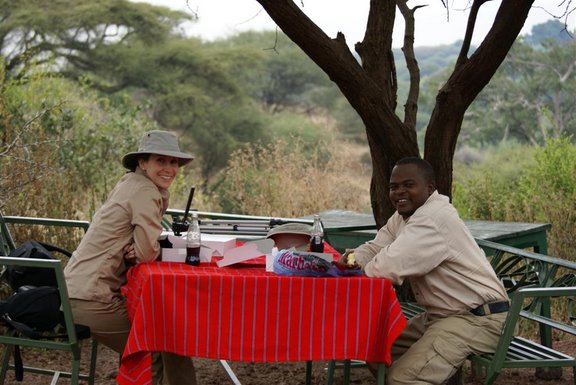
[Kate with our guide Ayoub in Tarangire National Park enjoying a picnic lunch]
Now that you are on the ground on Safari with our Journey To Africa guides you will get to experience their …
– in-depth knowledge and passion for wildlife – besides the big five [lion, leopard, rhino, buffalo and elephant], there are so many creatures big and small that will intrigue you and our guides will be there to give you all the details.
– birding skills – take your binoculars. We have beautiful birds to view.
– flora knowledge – depending on the time of your Safari, you will get to see different wildflowers.
– love for country and people.
– history of the land.
– food – they will have their favorites from their region
– movies and music – Hollywood has a far reach and ask them to introduce you to Swahili music.
…. and much much more.
Trust them and they will become your friends during your Safari.
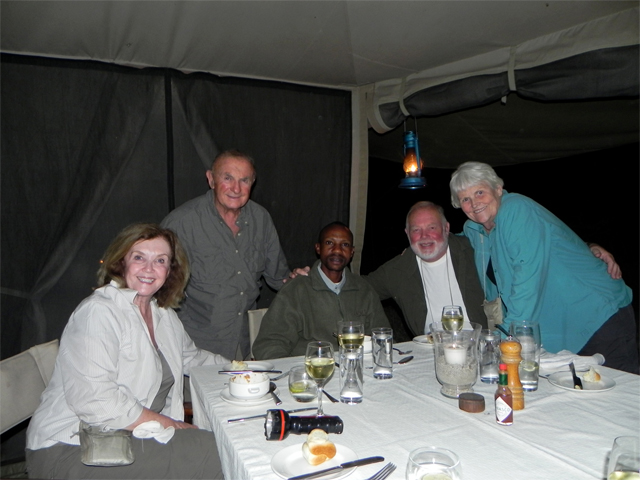
[Our guide Fadhili with clients Feldman and McLean at Olakira Camp in Southern Serengeti.]
Come spend time with our guides on a Journey To Africa Safari. Karibu!
Life worth Exploring. ™
Make memories on your Journey To Africa Safari.
Get in Touch //
Email us – Safari@JourneyToAfrica.com
Toll Free – 1.877.558.6288
Outside of US – 1.713.592.6228
Form – Request Information
When we have confirmed your Journey To Africa Safari, you are anticipating the beautiful lodges you will be staying and the comforts we have talked about when planning your Safari, the animals you will potentially see when in the National Parks, the landscape, the people you are going to meet, etc. But one thing that we can’t really describe that you will also experience is “smell”.
The smell of Africa. For me, the minute they open the KLM door in Kilimanjaro Airport, I smell ‘home’. I can smell the wood burning in the distance, the dust, the cleaner they use at the airport. When you get out and start your Safari, the smell of the trees, the open air, the vehicles and its emissions .. the good and the bad.
On Safari, you smell the musky dirt when it has rained or the dust during dry season. The animals and let me tell you, when you in the middle of thousands/ millions of wildebeests and zebras [poop, flies and all] or next to the hippo pool and all the gas that is emitted by the dozens of hippos or you have just passed a carcass – WHEW! Memorable to say the least.
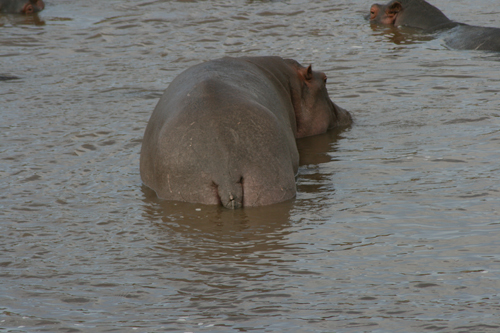
Expand your senses. Go on a Journey To Africa Safari.
 Journey To Africa
