Hippo Pool in Ngorongoro Crater

News from the bush //

When having lunch around the hippo pool in Ngorongoro Crater, keep your eyes peeled.

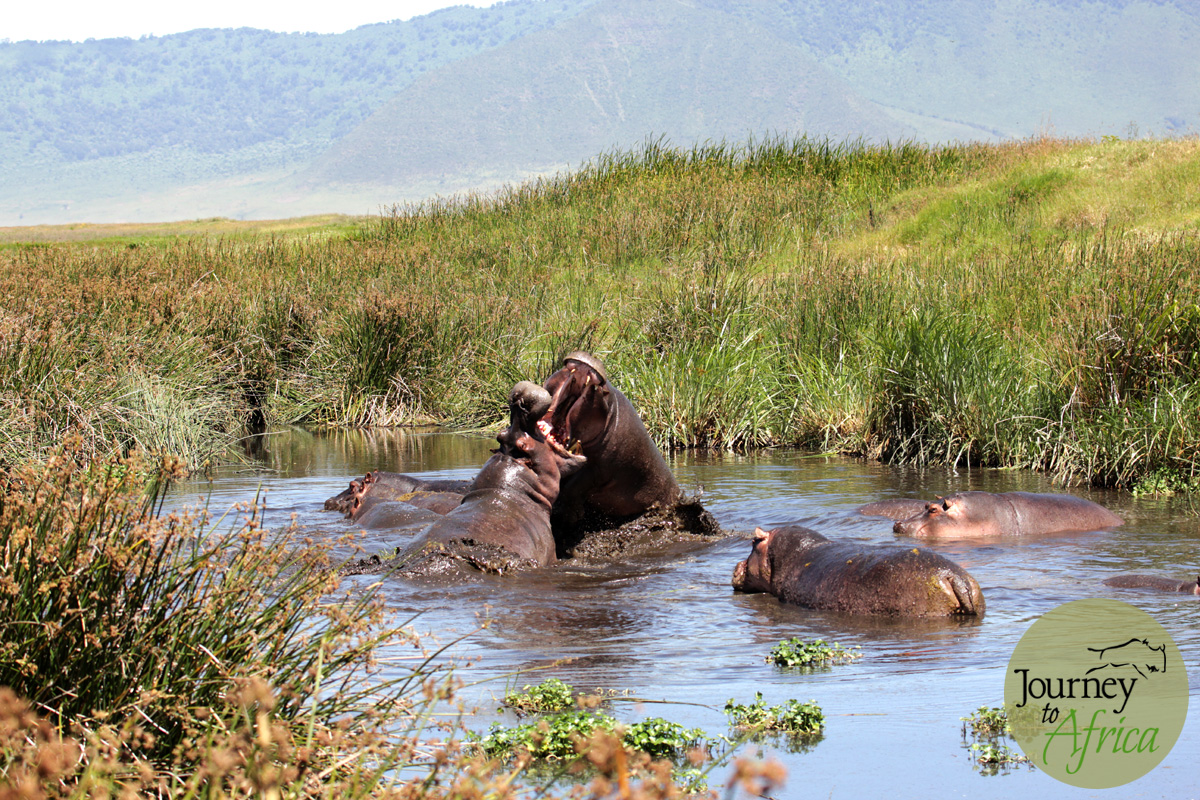
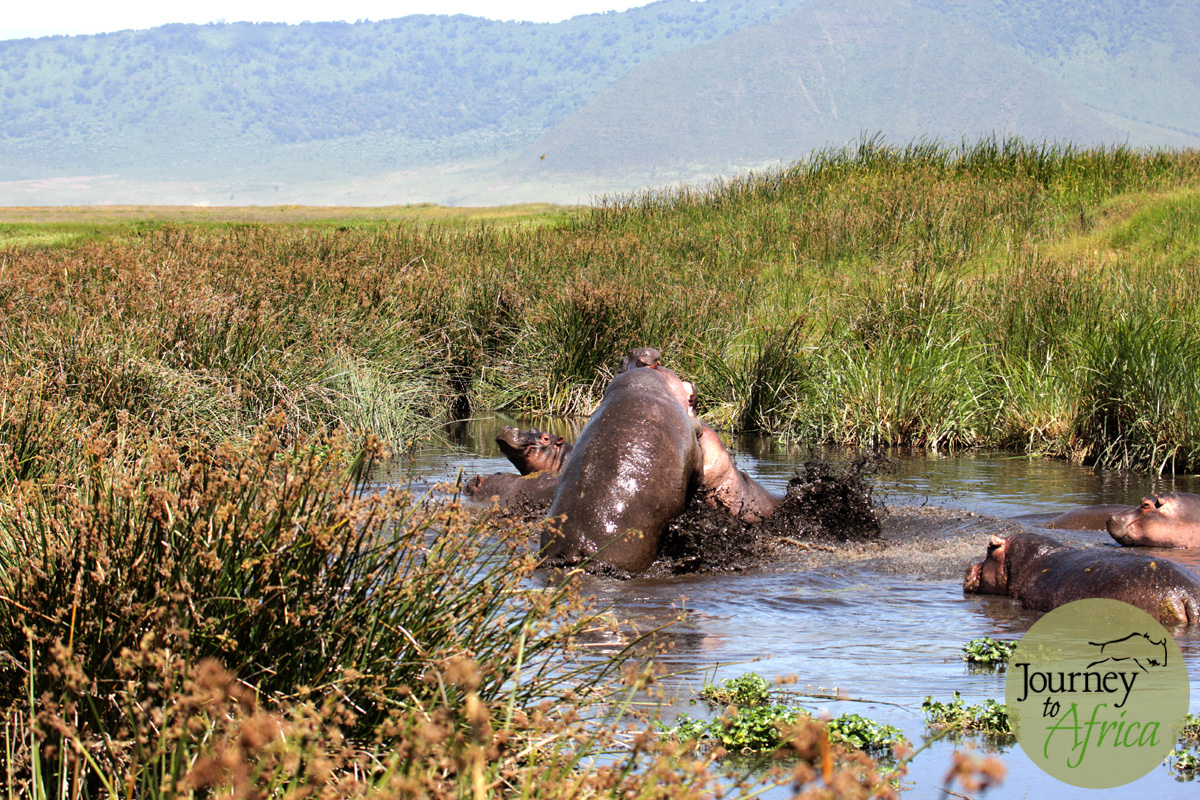
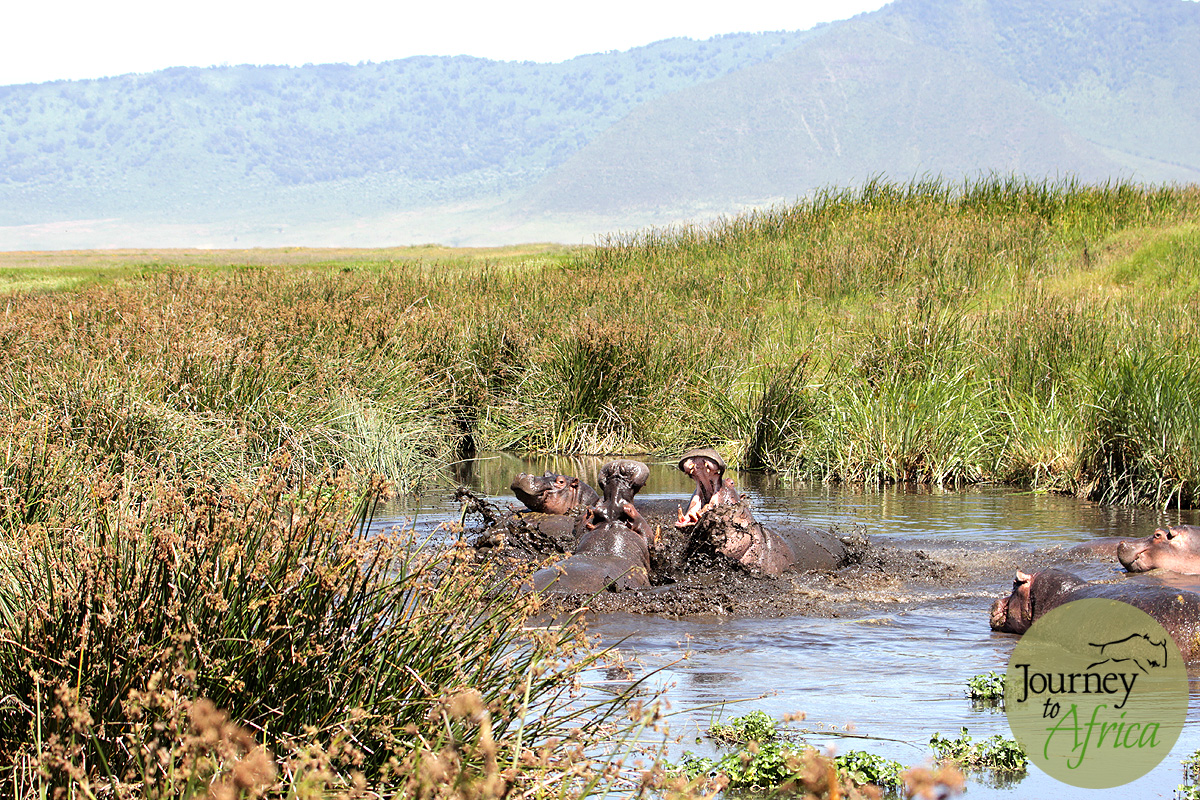
After viewing the packed hippo pool – lots of baby hippos here including twins – we were enjoying our Rhotia Valley Tented Lodge packed lunch when our entertaining guide Elisa told us to look at the two male hippos having a heated argument. They were really having a go at it and managed to have a few rounds of tussling around. Elisa told us male hippos tend to be aggressive. We would too if we had to stand packed in our own poo in a crowded pool.

Our front row seat in this tumultuous experience!

Hippo fighting in Ngorongoro Crater - June 2014.

Hippo fighting in Ngorongoro Crater – June 2014.

hippo_fighting_2

Hippo fighting – getting rowled up

hippo_fighting_3

My, what teeth you have!

hippo_fighting_4

You are going down mate!

hippo_fighting_5

It’s not over yet. We are going to have a go at it again.

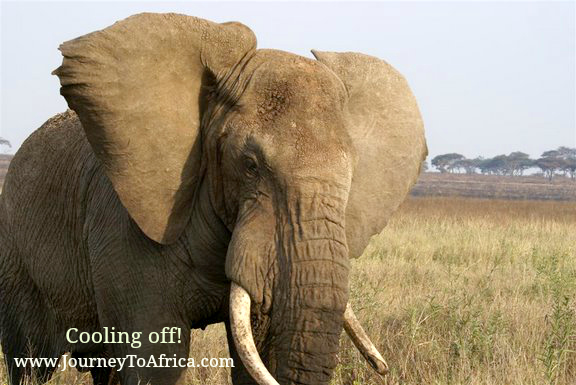
Did you know? Elephant ears.


African elephant ears!

African elephant ears!


What large ears you have?

An African elephant’s ears are about one-sixth the size of its large body. Elephants don’t have sweat gland so they flap their ears and use them to cool down in the hot African sun.  The extensive blood vessels that passes through the ears also radiate heat away. Spraying their ears with water and flapping will definitely aid in the cooling process.
And of course, they use them as fans to get rid of pesky flies.

Save our beautiful elephants!

Homepage


http://www.sheldrickwildlifetrust.org/

Photo of the week

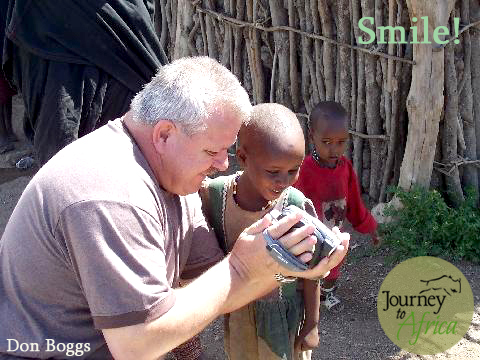
Don showing a little boy his own image. The smile on the boy is precious!

Don showing a little boy his own image. The smile on the boy is precious!

When on Safari, clients get to enjoy some cultural interactions. Whether is it spending time with your Tanzanian guide, going to see the Hadzabe tribe around Lake Eyasi, visiting a local school or stopping at a Maasai boma, these interactions for a lot of clients bring great joy. They are an eye-opening experience.

Don got to enjoy a lot of smiles from Tanzania. He stopped in the town of Moshi, base of Mt. Kilimanjaro first to meet with a girl he sponsors. On Safari, he and his friends got to spend time with the Hadza as well as Maasai tribe.

Best time to go on Safari in Northern Tanzania

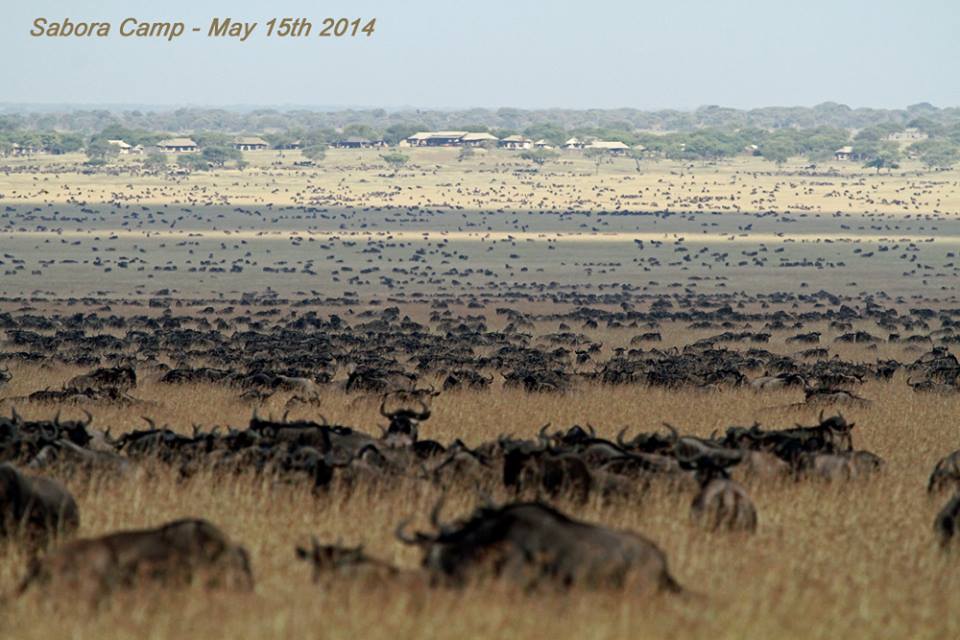
Taken by our elite guide Paul Oliver in Western Serengeti from Sabora Tented Camp

Taken by our elite guide Paul Oliver in Western Serengeti from Sabora Tented Camp in May 2014

One question we get a lot is what is the best time to go on Safari in Northern Tanzania?
Really, anytime you can make it, is good time for Safari. The wildlife is always present. If you are interested in the Great Wildebeest and Zebra Migration, a natural wonder of the world where 1.5 million Wildebeest and 0.5 million Zebra roam the Serengeti and Masai Mara eco-system, then we move you in the right place, right lodge for the right month.

Having said that, some people are extremely sensitive to heat.  If that is the case, stay away from December to March as Serengeti can be dry, dusty and hot [90Fs during the day with cooler 70Fs during the evening]. Our camps + vehicles do not have air condition which can be an issue.

If you are up for an adventure, pack your bags.

  • November to December // short rain season. Sporadic showers will not hinder your Safari. Wildebeest and Zebra migration heading to Southern to Eastern Serengeti and Ngorongoro Conservation Area.
  • January to March // hot. Birthing season for the Wildebeest and Zebra. Still in Southern to Eastern Serengeti and Ngorongoro Conservation Area. Tarangire National Park with its resident wildlife and its rivers and swamps will make you fall in love with this park.
  • April to May // long rain season. Showers can last a few hours but when it clears, fresh skies. If you don’t mind being adventurous [plans may change but we always have a Plan B] this is a great time to visit and get some amazing deals on lodges.  Paul Oliver calls this the secret season – less crowd but awesome wildlife – see his picture above. Tarangire National Park has black cotton soil which is tricky to drive on when it has rained hard but as we mentioned, get ready for an adventure.
  • June to July // cooler months. June is green after the rains. Enjoy the wild flowers. Migratory animals are roaming from Central to Western Serengeti on their way to Northern Serengeti. Wildlife from the surrounding areas are about to enter Tarangire National Park.
  • August to October // cool and dry season. The Wildebeest and Zebra population is dispersed in Masai Mara to Northern Serengeti. Mara River crossing is a site to witness. Tarangire National Park is alive with wildlife thanks to its permanent Silale Swamp and Tarangire River.

Twende [Let’s go] Safari!

Photo of the week

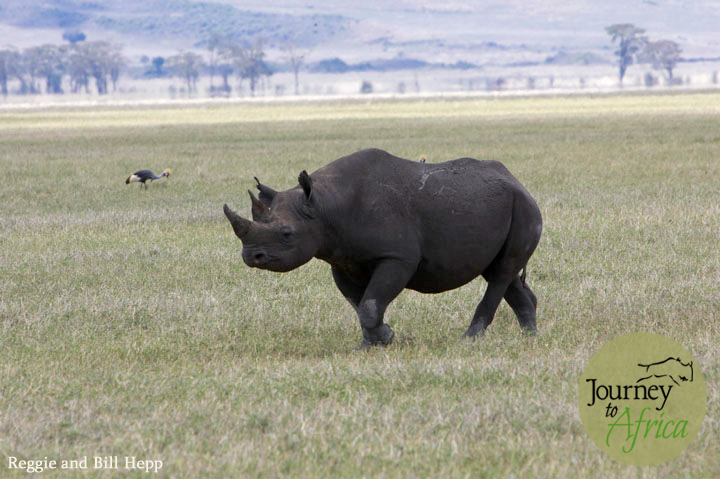
Taken by client Reggie and Bill Hepp in Ngorongoro Crater.

Taken by client Reggie and Bill Hepp in Ngorongoro Crater.

Beautiful black rhino, with a peaking crested crane, in Ngorongoro Crater.

To save our rhinos from poachers, please remember to never buy rhino horns. Their horns do not aid in fertility, give you strength or aid in fever reduction.  Horns are actually made of keratin, the same material our human fingernails and toe nails are made off.  Do not buy artifacts with rhino horns. Say no to bracelets or daggers made out of rhino horn.

The only place a rhino horn should be is on a rhino!

For more information and help, visit //
http://www.savetherhino.org/
https://biglife.org/

Maasai and Ngorongoro Crater

Walking is not allowed inside Ngorongoro Crater, unless you are a Maasai tribe member.  They are the only people currently [they were once again allowed in the 90s after restrictions] who are allowed to bring their cows [cattle] into this wildlife-dense eco-system. The number of cows a person owns displays the patriach’s wealth.  Its their currency. They depend on it for meat, milk and blood.  Yes, blood. Maasai tribe members fill their gourds with milk and blood.

Maasai have coexisted with wildlife for generations.  They used to live in the now Serengeti National Park, Ngorongoro Conservation, and Masai Mara and its wider area in Kenya area until these areas were designated National Parks or conservation.

Today, in Tanzania,  they continue to live in Ngorongoro Conservation Area.  You can stop at one of the boma [homestead] for a quick visit – a tourist stop – or you can go to a private conservation in areas like Longido [east of Serengeti] such as Alamana Reserve.  Here, you can spend time understanding and learning about the unique, fascinating, and changing Maasai tribe.

Maasai tribe members walking their cows to Lake Magadi

Maasai tribe members walking their cows to Lake Magadi

Specialist Guides on Safari

Our Safari guides are fantastic! We feel incredibly lucky to have some of the best trained guides working with us.

Sometimes, some clients want something different. They want to dig a lot deeper as they crave more knowledge of the animals and the land. They want in-depth answers to the what, why, how, when, why not, what if, what now, what more. Specialist guides will have your in-depth knowledge soar.

What makes them specialist guides?

  • Guides that have been guiding for more than 20-25 + years.
  • They train other guides.
  • They are friends/mentors with other specialist guides.
  • They cater to clients who already know a lot about the land, its people and wildlife.
  • Guides who are in the news as they have done research or have been part of research teams or organizations.
  • They are into photography and have articles published or are mentioned in articles.
  • They care about conservation and are our public voice. They have access to a larger platform.

But above all, they want you to come and enjoy being on Safari. They will have you love our country as much as they do. Twende [let’s go] Safari. There are fantastic memories to be made.

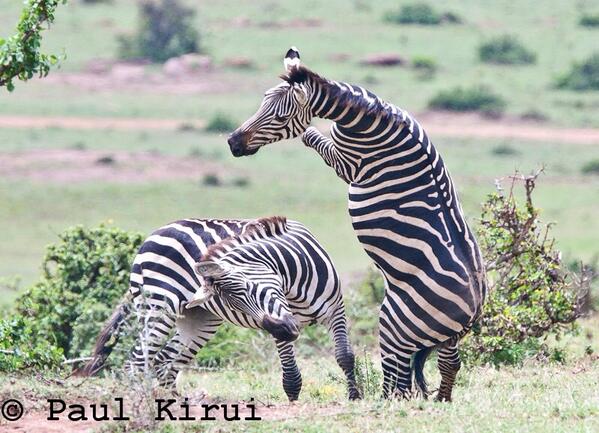
Stunning capture of zebras fighting.

Stunning capture of zebras fighting.

Paul Kirui.
We were first introduced to him in 2005 when we were on Safari in Masai Mara. Our luck we crossed paths with him. Paul, who has a gold standard certification, has been a source of information. He was involved with BBC’s Big Cat production as well as Disney’s African Cats.  He has been on many top Safari guide list. A Safari with him would be equal to winning a lottery.

Paul Oliver.
You have head of him many times on our blog. He has been our mentor when we first started Journey To Africa. At that time he operated Oliver’s Camp in Tarangire. Today he divided time between Tanzania and Australia. His passion for guiding is unwavering. He is an avid birder. He and his trusty land-rover can take you from Northern to Southern Tanzania. Get ready for a witty time.

Paul Oliver birding in Southern Tanzania's Katavi National Park

Birding in Southern Tanzania’s Katavi National Park. Taken by our friend Paul Oliver.

Jo Anderson and Mark Baker. 
Jo and his business partner Marc, started an organization in Tanzania called Carbon Tanzania. They have teamed up with local community and together with lodges and Safari companies, off-seat your carbon footprints.  They are deeply involved in conservation and going on a Safari with them will want you doing more for Mother Earth.

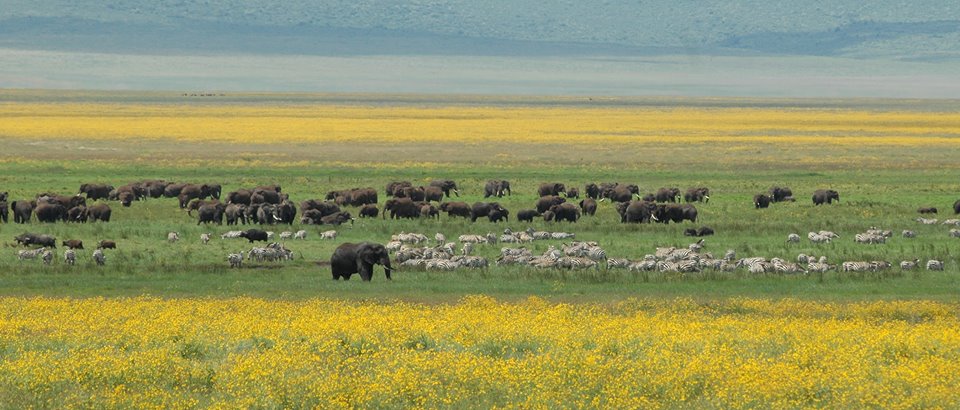
Why so many elephants in Ngorongoro? Poaching in other regions have them taking refuge here.

On his May Safari, Jo counted 350 + elephants in Ngorongoro? Not normal. Poaching in other regions have them taking refuge here.
logo


Life worth Exploring. ™
Make memories on your Journey To Africa Safari.

Get in Touch //
Email us – Safari@JourneyToAfrica.com
Toll Free – 1.877.558.6288 
Outside of US – 1.713.592.6228
Form – Request Information

Photo of the week

alisa thomas

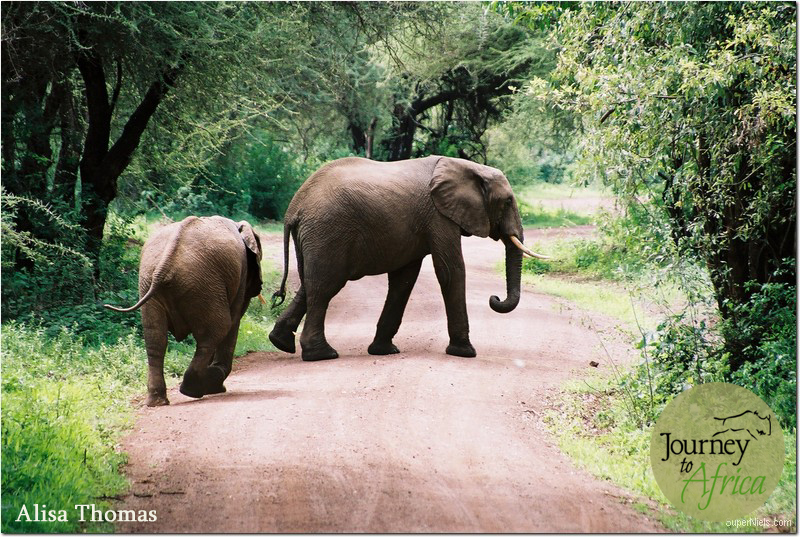
Taken by client Alisa Thomas

Alisa Thomas, a five time Journey To Africa took this beautiful Elephant mama and mtoto [mother and child] in Lake Manyara  National Park in 2004.  Stay safe precious elephants.


Our Guides

One of the biggest reason we have many repeat clients and clients sending referrals is our guides. Our guides will always make your Safari special. They will help you fall in love with Tanzania and Kenya and get you hooked on being on Safari.

We had a fantastic time. It all started with Ayoub. He was a fantastic guide. He was very articulate and spoke multiple languages. Kate Bartell had told me to request him. We got him by accident. He made the days truly memorable and outstanding. I made him an honorary Texan. If I ever do this again, I want him, and I would highly recommend him to your future clients.”
Carlos Mata – July 2011 and June 2013

Carlos went on Safari both times with Ayoub. He has made a friend in Ayoub for life.

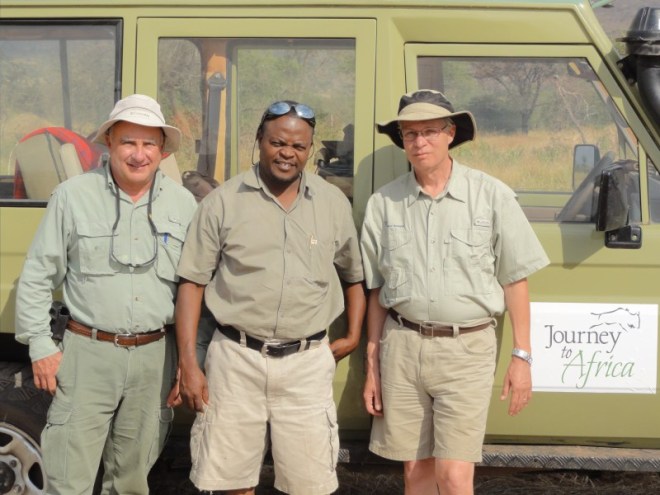
Carlos and John with Ayoub

Carlos M. and John L. with guide Ayoub on their second Journey To Africa Safari

Our guide, Luke, in Kenya was very good.  Our guide, Elissa was outstanding.  We enjoyed the company of both men and they made us very comfortable during our safari excursions.  Elissa was always on time and always explained things to us in detail.  We also felt very safe with him.  He also has a great sense of humor.”
– Gayle Thomas – July 2013

Gayle is mother to Alisa Thomas who has been on 5 Safari with Journey To Africa. She and her mother had a mother + daughter Safari to Southern Africa in 2008 and went back to Tanzania + Kenya in July 2013. 

lunch in Ngorongoro Crater

Maria J. with guide Jackson having lunch at Ngorongoro Crater picnic site.

Our guides have to work hard to keep working as guides. During off-season, they have to go through intense training not only in wildlife and plant knowledge but human phycology, astronomy, vehicle maintenance, first-aid, and much more. Trained by renowned guides like Lewis Mangaba, head guide at our favorite Oliver’s Camp, who recently won the Wanderlust Magazine best guide award to fantastic teachers like Richard Knocker, Ethan Kinsey and our friend Paul Oliver.

10154194_567637740017108_2037583338954293184_n

Receiving their training certificate from Lewis Mangaba [in shorts]

Asante Sana [thank you] to all the hard-working guys on Safari.

Life worth Exploring! Capture memories on your Journey To Africa Safari.

Get in touch //
Email – Safari@JourneyToAfrica.com
Call – 1.877.558.6288

Serengeti Map

20140430-130640.jpg
My Serengeti map drawn by my 5 yr old son.

Safari planning / dreaming in full swing here.
Twende – let’s go!