Keep Calm and Swat Away!

TseTesThis is Richard, my guide on my exhilarating Walking Safari in our private area in Serengeti. He has company – Tsetse flies. I had their company as well … I was right behind him and took this shot.

When on Safari in Tanzania and Kenya, there are areas in the parks and conservation areas where you just can not avoid these pesky flies. We are talking amazing areas like Northern and Central Serengeti and Tarangire National Park.  Rivers, bushes, woody areas are were you find them. Not going there would be such a shame.

You can do a few things to help yourself.

Wear light-colored clothing.
These buggers are attracted to dark colors. Avoid dark blue and black clothing on Safari. You will notice cloths with this color hanging from trees in various areas, put there by the park officials, in hopes that these flies will be hanging out on the cloth instead of on you.

Try loose clothing.
Create a barrier between the fly and your skin. This is the best protection. And will keep you cool when hot. Win-Win.

Fly swatter.
Some clients have brought these swatter and it has helped them but you have to be really fast. They come in droves and are quick to nip.  You have to Keep Calm and Swat Away. You will feel accomplished when you get a few.

Anti-itch cream.
Okay so let’s be realistic here. Chances of getting bitten are there. You can put some anti-itch cream right away and it will help with the itch. And try not to scratch the sweet itch as you are in risk of getting a gash – personal experience here. Ouch.

Tsetse flies do carry the disease sleeping sickness but the chances of getting the sickness is very rare. If you exhibit high fever for days and it is not Malaria, let your hospital/ doctor [with help from infectious disease] know you have been in areas with Tsetse flies.

The silver lining here is that these flies keep the cows and humans away from the wildlife zones. They don’t seem to bother wildlife which means more areas for the wildlife to roam and slow down of human encroachment. We are talking about the Maasai tribe who live on the periphery of the parks with their cow herds and farmers with their machines. Stay back!

Keep Calm and Swat Away. Happiness is being on Safari … even with pesky Tsetse flies.

logo

Life worth Exploring. ™
Make memories on your Journey To Africa Safari.

Get in Touch //
Email us – Safari@JourneyToAfrica.com
Toll Free – 1.877.558.6288 
Outside of US – 1.713.592.6228
Form – Request Information


View from the sky.

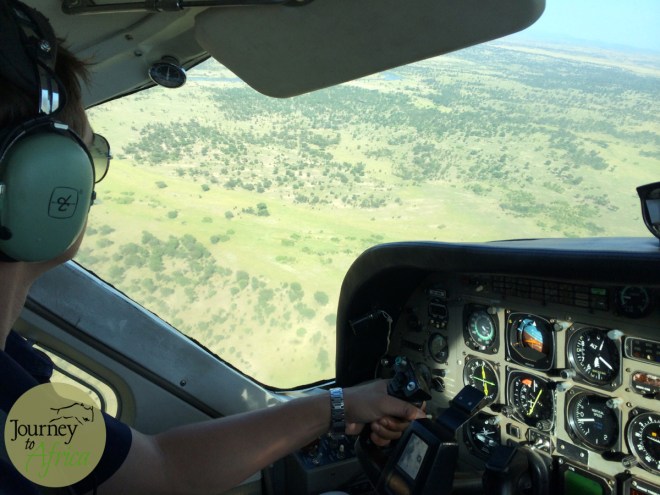
I can check off being a co-pilot off my bucket list. On my Tanganyika Flying Company’s flying taxi from Arusha to Northern Serengeti and Olakira Camp, Captain Cody let me sit in the front and control the plane. Okay, kidding but how fun getting to sit in-front with the captain!

He gave me a ‘crash course’ on how small Safari related planes work in Tanzania.

IMG_4480

Captain Cody and Co-pilot Mefi

First, they don’t really rely on a control tower but rather the pilots talk amongst themselves for who gets to land first, flight path to small air-strips,  etc. That is why they really are taxis. If they get a call from the main office they have a client on their route, they will fly down and swoop them to the next destination.

Second, it was technical. What gauge to pay attention to, some details on buttons, what to do when the alarm rings. These pilots have to clock in 1000 + hours before they can fly the plane on their own. Safey first. They are carrying precious cargo.

Thirds, watch out for birds. Birds follow the migratory animals and they run the risk of bumping into them. They try to swerve around if they can. Watch out birds – don’t fly into the engine.

Four. Even though I took my co-piloting duty very seriously [cough cough], my main job was to enjoy the view below.

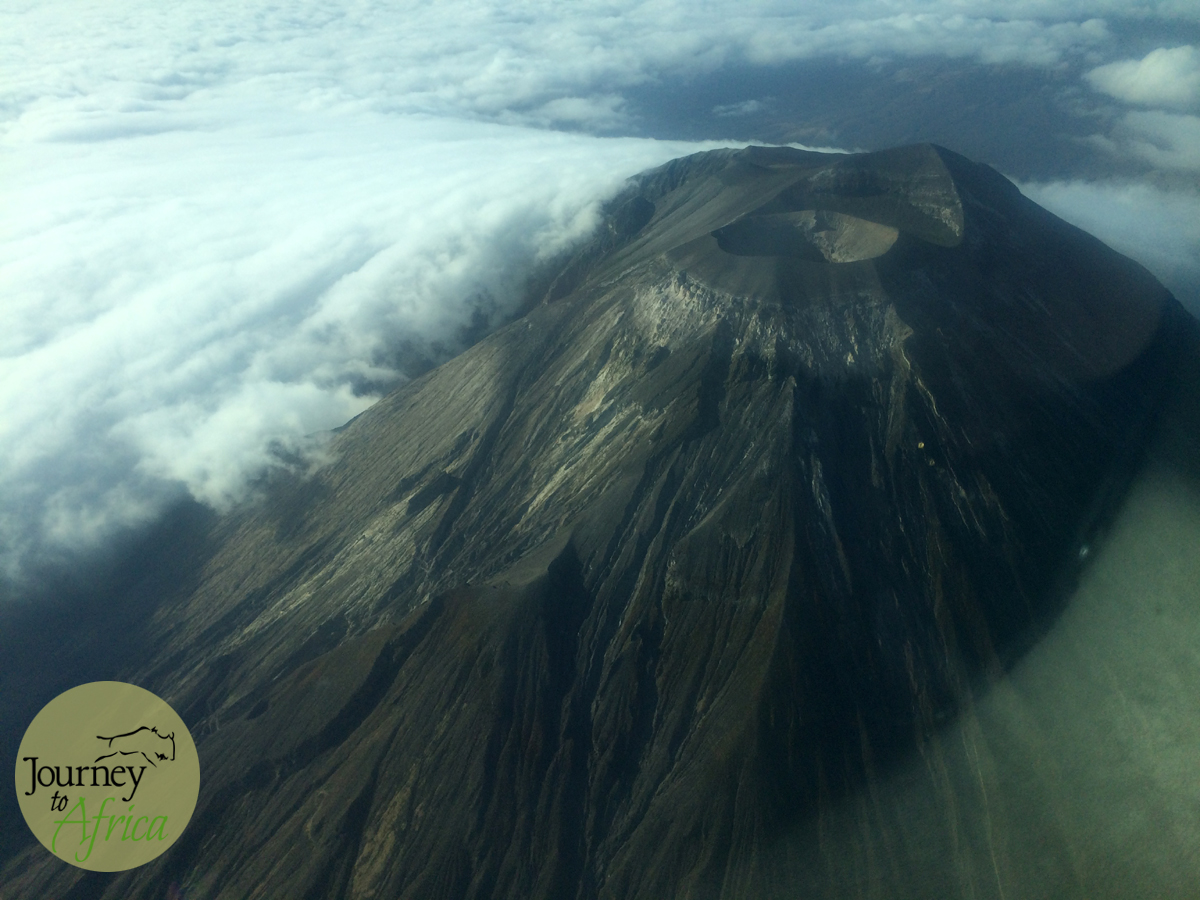
This was the best one on this leg – Ol Doinyo Lengai, the Mountain of God for the Maasai tribe. It is a volcanic mountain that continues to spew gas. Many people still climb it though they should be aware of the risk. But from my flying taxi, I was safe to capture this great mountain.

oldonyo lengai

Ol Doinyo Lengai – The Mountain of God for the Maasai tribe in Loliondo Area.

logo
Life worth Exploring. ™
Make memories on your Journey To Africa Safari.

Get in Touch //
Email us – Safari@JourneyToAfrica.com
Toll Free – 1.877.558.6288 /
Outside of US – 1.713.592.6228
Form – Request Information


What is a Luxury Safari?

Luxury is relative to each one of us. Is it having 300+ thread counts in our beds or would using a wilderness tent [small dome tent with a sleeping cot] be okay with you if it means enjoying walking in our private area in Serengeti? The best bottle of wine with gourmet meals? Are you going to be happy with perfectly good 5 gallon bucket shower or do you need endless water and a bubble tub? We want to know more about your expectations on Safari.

sunset_one
How do we define luxury Safaris? 

Here are our 4 thoughts. The minimum expectation you are guaranteed when enjoying our Safaris in Tanzania, Kenya and beyond.

1] Peace of Mind.
Our Safaris take care of you from arrival into Kilimanjaro Airport or Jomo Kenyatta Airport  to when we drop you off at the airport for your flight home. “Safaris are like grandmothers” – Susan Portnoy, a photographer mentioned. All the care with the warm and fuzzy.

We will book your Safari lodges and take care of all the in-between. Your park fees and conservation fees.  All meals and snacks on Safari are arranged. Our well maintained closed or open vehicle will have bottled water and soft drink as well as plugs to charge camera batteries, phones and other electronics so you don’t have to wait until the evening when you go to the lodge. Local flights will be booked. Transfers will be arranged – someone will pick you up and drop you off. And much more.

What we insist you must do is sit back and relax! You are on Safari.

2] Experiences and Great Memories.
Many studies
show that happy people are those who have accumulated experiences and memories in their lives. We aim to enhance your happiness.

“Travel is my therapy”

How do we plan on doing that?

– Via our guides and their knowledge, warmth, patience and more. To our first time on Journey To Africa Safari goers to our fifth time client, our guides are our backbone. They help make great memories and experiences on your Safari. They are also our ambassadors.

– Adding details to your Safari.  We don’t want to give away too much of what we do here but it’s the little things that make the big things happen.

food for Safari - sundowners - Oliver's Camp

3] Ambiance.
Trust us! You will not go hungry on your Safari. Three meals cooked with the basic of tools and snacks – we are talking cakes and cookies and nuts –  at any time. And the abundance of good coffee and tea.

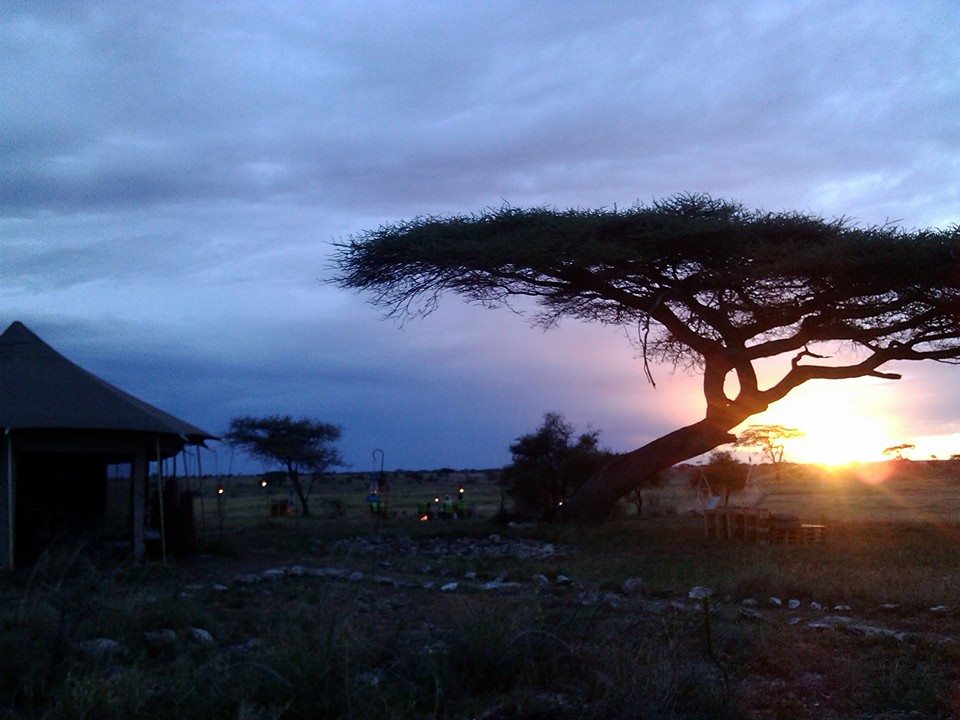
But the best luxurious part is that the settings will be amazing. You may have breakfast in the middle of park, lunch overlooking the Serengeti, Tarangire River or Hippo pool in Ngorongoro, have picnic under the accacia tree and spot elephants roaming in a distance. And dinner under the stars with candlelight sharing stories with your camp manager and other Safari goers while hearing the hyenas, wildebeest or lions in the distance.  Different from how you enjoy your food at home. Luxury.

Food evokes memories and after a Safari, you will bring home lots of those.

dinner ambiance

4] Lodges with a Soul.
Our criteria when choosing the lodges we recommend is that they have to have the 3 Cs. Conservation + Community + Carbon off-setting ethos.

Your dollars help out in a lot of behind the scenes effort.  Now that is luxury to us. The ability to assist the visiting country, it’s people and the precious wildlife.

Whether it is wildlife conservation via Honeyguide Foundation with our Asilia Africa lodges like Olakira Camp or supporting a sustainable orphanage by building a fully equipped bakery like Rhotia Valley Tented Lodge or off setting carbon footprints like our walking Safari partners.

Our lodges also support a lot of families. 1 staff member in our lodge will take care of 4-6 + family members at home. Ask us for more details on each organization should you be interested.

packforapurpose

We hope you will join us on a Luxury Safari.

logo

Life worth Exploring. ™
Make memories on your Journey To Africa Safari.

Get in touch //
Email – Safari@JourneyToAfrica.com
Call – 1.877.558.6288 / 713.592.6228 [outside US]
Form – Request Information


Lost in translation

On Safari, you are going to be spending a lot of time with your guide, your new friend. This person comes from a different culture, different background, does not know you, your personality yet he is going to show you a great time. That is his goal and our repeat clients are a testament to how hard they work to make it happen.

Be open and patient with things that can get lost in translation.

lost_in_translation

Makubi sharing some photography tips.

My guide Makubi from Dunia Camp in Central Serengeti was telling me his Wakuria tribe culture was not to look in the eye when talking. That is a sign of aggression. He would never do that in his village with his elders or peers. In our western culture, if you don’t look in the eye when talking, you are rude.  The dilemma. He adapted.

Reuben, my guide from Olakira Camp, one of my favorite camps in Tanzania is a Maasai. A proud warrior whose maasai blanket [his tribal clothing] would peek from his sleeve. He said wearing the clothing reminded him of his heritage. He would sit with us for dinner and share some good stories. When we were served polenta with our lamp chop,  he would be polite and have small bites but I have a feeling after our meal, he would head to the kitchen and prepare his own local food.

They go through lots of training so they can understand our western sensibility and adapt for our comfort. To be fair, be open to a different culture. Don’t get offended with what may not translate to our culture.  Talk. You will learn from your new friend when on Safari. Isn’t that part of the adventure?

Life worth Exploring. ™ Make memories on your Journey To Africa Safari.

Get in touch //
Email – Safari@JourneyToAfrica.com
Call – 1.877.558.6288 / 713.592.6228 [outside US]
Form – Request Information

Safari with children, why yes!

Taking children on Safari? Brilliant idea.  You will be making some great memories together as a family on Safari.

We have been lucky to introduce Tanzania and Kenya to many children over the years.   The ideal children age to go on a Safari of course depends on the maturity of your child but generally we say 8 – 9 years old is a good age to head out. That is also the minimum age at some of the lodges on Safari.

kids_banana

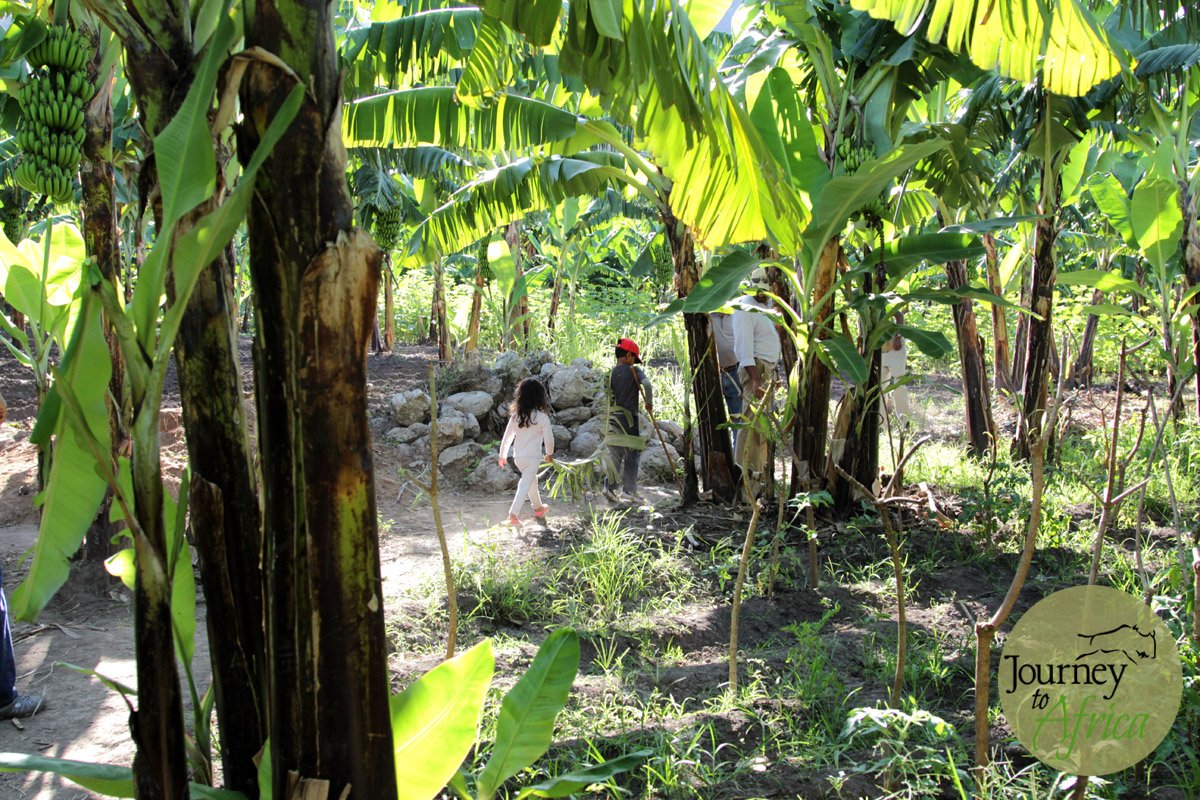
Walking in the village of Mto-wa-Mbu. A chance to see how other people live around the world.

Together when planning the Safari with the parents and grandparents, our Safaris with children have included more cultural stops. School visits are arranged, spending time with Maasai or Hadzabe tribe, village stops, and shopping in the local food markets.  An eye-opening experience for your children and adults alike.

We have two families climb the highest mountain in Africa, Mt. Kilimanjaro.

Kyle H, 16 year old young traveler stands out.  Her parents had already booked their Safari + Kilimanjaro climb and warned me she was not interested in ‘Africa’. Her friends were going to Paris.  Well, when she came back after having made it to Uhuru Peak, the roof of Africa, she called to say she was so glad she went .  She made great friends with the guide and crew on Kilimanjaro, learned Swahili, enjoyed berry picking with Hadza girls in Lake Eyasi and of course loved seeing animals on Safari. Whew!

home

We have a four helpful tips for you to consider when planning a Safari with your children.

# 1. Slow down.
We would definitely recommend spending at least two nights in each lodge. This way the children get a sense of ‘home’.  Find lodges that welcome children and have activities to keep them entertained. We have a list of lodges that do just that.

You have places like Rhotia Valley Tented Lodge in Ngorongoro Area where your children will be playing soccer with the kids in the field or chatting about future aspirations and dreams.  Life long friendship may develop from these evening chats.
Walking-safari-with-kids-Mara-Bush-houses-main

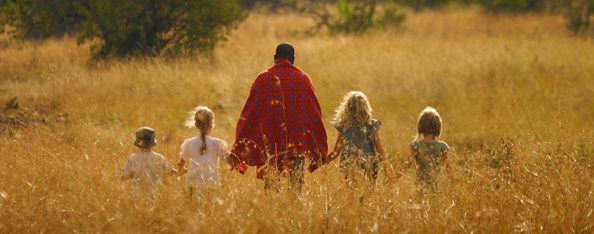
Masai warrior at Mara Bush House taking children on a walk. Photo @AsiliaAfrica

Lodges like Mara Bush House in Kenya’s Masai Mara let’s you have some down time, if you like, while the Maasai tribe member takes the children out for an activity around the lodge [besides game driving]. They discuss wildlife and plants, take part in local customs, learn conservation — your children will come back with experiences they will never forgot.
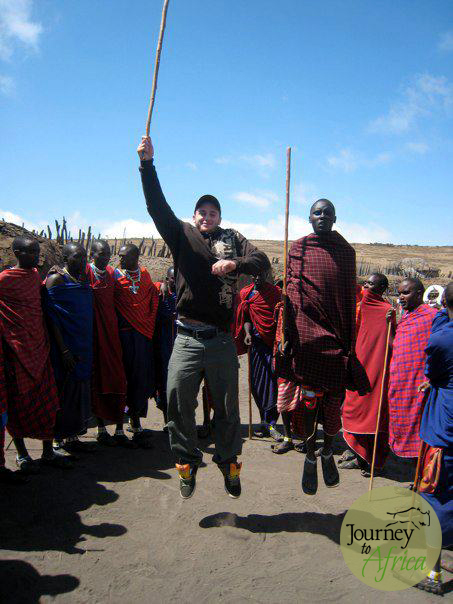
dina_garner

Jake G. having a go at Maasai dancing. Not bad for his first time.

# 2. Short hours.
Parents traveling with children realize that spending all day on a game drive may not be ideal. Take breaks from game driving from the vehicle.

IMG_4172

Longer picnic lunches were a good time to stretch our legs. In the distance, you could see a herd of elephants coming for a drink from the Tarangire River.

Remember to stretch out during your game drive. Enjoy a long lunch at the picnic spot where the young can ‘run’ around a bit under controlled environment — ask your guide. Make stops to visit the local village and tribes. This breaks the Safari a bit and allows the children to get hands on.

Be prepared to spend a few hours in the morning exploring and then come back to the lodge.  Enjoy the afternoon by the pool or reading a book or maybe watching a movie on an iPad. In the late afternoon /early evening, let them pick a drink of the choice from the lodge and head out for a sundowner where you get to enjoy your drink while watching a glorious sunset.
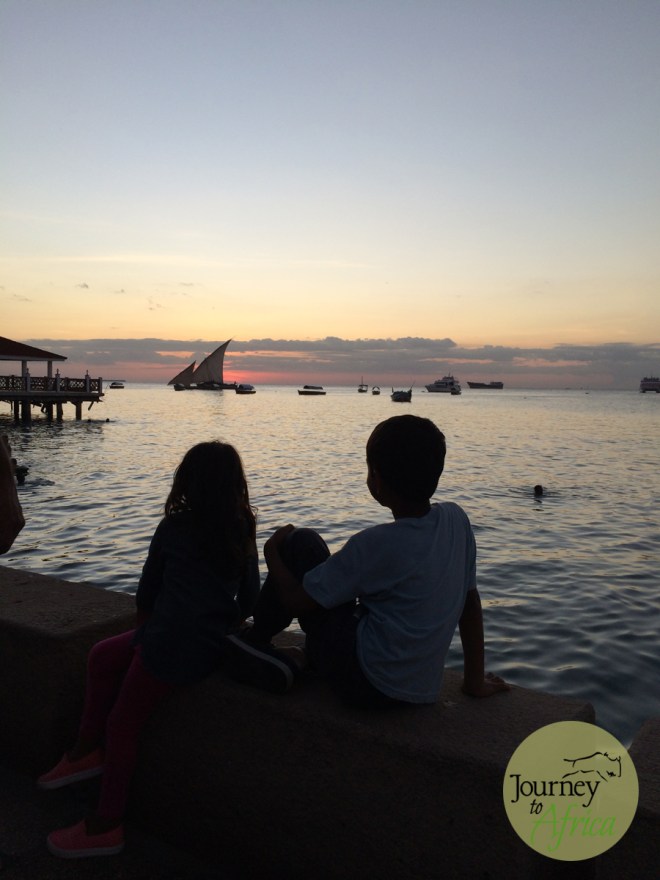
IMG_4378

Sunset in Forodhani, Stone Town, Zanzibar Island

#3. Stop.
In Stone Town, we had plans to walk the alleyways in the afternoon and do some shopping.  Well, diving into the Indian Ocean happened. Our children were happy to sit and watch the Zanzibari children jump the wall into the Indian Ocean for hours. Stop. I had to let shopping go and instead I captured their happiness with the beautiful sunset.

Our families on Safari do the same. We chose lodges with amazing views so they can stop. One family spent the whole day at Sayari Camp enjoying wildlife while lounging at the pool and their tent. The father told me he managed to read a whole book, a luxury for most busy parents while still enjoying elephants, birds, wildebeests and zebra strolling in the distance. A good stop for everyone.

17th birthday for Yanni

Yanni serenaded by the staff at Lake Masek Camp

#4. Savor the moments.
Traveling with your children is all about memory making as a family.  Taking them on a Safari will inspire them to be future conservation leaders, wildlife researchers, and maybe even assist Tanzania + Kenya in other areas like education and technology.

“To travel is to take a journey into yourself” – Danny Kaye.

Our young Safari traveler turned 17 years old in Serengeti.  The staff at Lake Masek Tented Camp in Southern Serengeti baked him a birthday day and the staff sang happy birthday to him … for breakfast. They were leaving by lunch time. We hope that memory is special to him and his family forever.
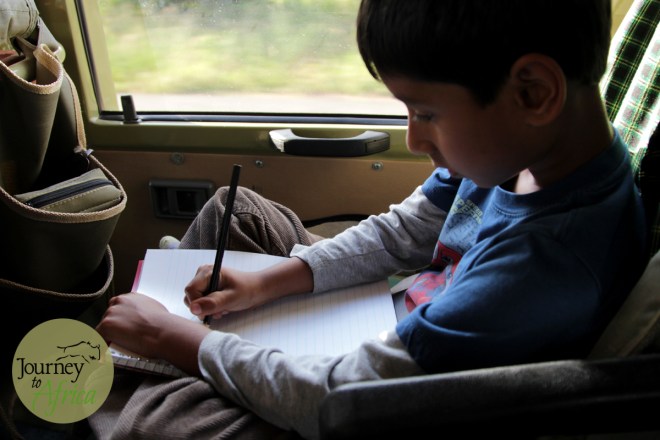
IMG_4434

Journal keeping

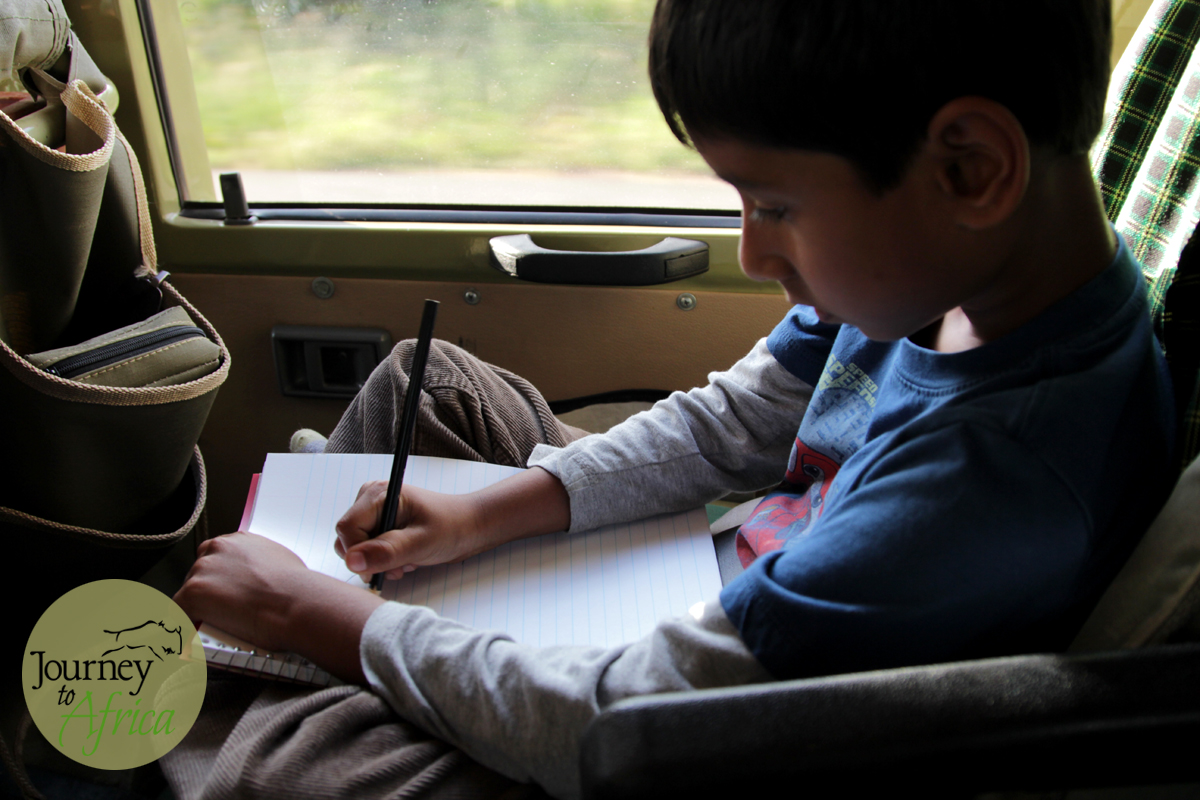
My Safari experience was enhanced this past June on our Safari. My 5-year-old son and 3-year-old daughter are huge Wild Kratt fan, a PBS show fan. It was great to hear my son asking our guide Elisa all these questions about the animals.  Why is the giraffe tongue dark? Have you seen a caracal? What makes flamingos pink? You could see him testing Elisa with what he had heard from Chris and Martin Kratt.

When I asked him to record his sightings, he would somehow tie in the animals with his love for Star Wars. Death Star and the warthog. The journal with his observations is a keeper. My 3-year-old daughter, she wants to be Aviva and save the animals.

Take your children on Safari. It is definitely worth it!

logoLife worth Exploring. ™
Make memories on your Journey To Africa Safari.

Get in touch //
Email – Safari@JourneyToAfrica.com
Call – 1.877.558.6288 / 713.592.6228 [outside US]
Form – Request Information

This close.

closeness_to_vehicle

Move out of my way.

How close do you get to the wildlife on Safari?
Close, really close. In fact sometimes they can get so close, you can smell them. And that can be a memory etched in your brain forever. In a good way of course, especially when you are away.  You just have to be in the right place at the right time.

When on my Safari to Serengeti, Ngorongoro Crater and Tarangire National Park this year, I was lucky to encounter a lion with her baby, 20+ lion family snacking on a wildebeest [taken with my iphone], lots of elephant families in both Serengeti and Tarangire, female impalas harems, rhino crossing close by and more.  When we were driving out of the private area after my Serengeti Walking Safari, I even saw a cheetah with a baby cub walking right by our vehicle. Side note here – do not pack your camera as I missed this shot. Or maybe it was nice just enjoying the moment without taking pictures. Safari problems.  

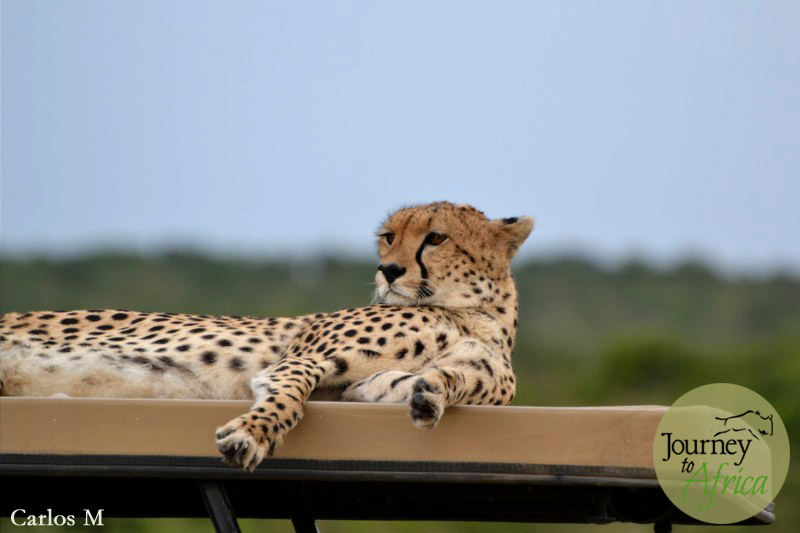
My client Carlos M has had a cheetah jump on a Safari land cruiser close by when in Masai Mara. How close is that!

In Northern Serengeti, we were enjoying some coffee when a herd of wildebeest decided to gallop right past our vehicle. Coffee time with a view – very enjoyable.

Migration in the background

Hello wildebeest. Coffee?

Life worth Exploring! ™ Make memories on your Journey To Africa Safari.

Get in touch //
Email – Safari@JourneyToAfrica.com
Call – 1.877.558.6288 / 713.592.6228 [outside US]
Form – Request Information

Ebola and Safari in Tanzania and Kenya

Namiri_Camp_Ebola_Story

Enjoy waking up on Safari from Namiri Plains in Central Serengeti, Tanzania

Ebola has been in the news a lot lately. It is a terrible disease that has plagued West Africa. The good news for those heading to, in, or planning to head to Tanzania and Kenya on a Safari – we are 3,300 miles away.  The distance of Orlando, FL and Juno, Alaska.

The virus has not been detected in Kenya or Tanzania. The airport officials are on a look out with anyone coming in that look like they have a symptom. Thermometers and thermal scanners have been brought in for detection in some airport. They would be immediately quarantined. No one has been quarantined yet in Tanzania and Kenya. Kenya and other countries with airlines are so cautious that they have stopped flights.

Talking about flights, it is not transmitted via air.  You would need to handshake a person with Ebola to contact this terrible disease.

Should a sick individual even have a ticket to travel from West Africa, they will not be able to travel as they will be too sick. And may not even be able to get on board.

So, don’t change your Safari plans. If you are planning a Safari to Tanzania and Kenya, don’t let Ebola stop you.  There are some great Safari deals right now for both Tanzania and Kenya to take advantage.

logo


Life worth Exploring! ™
Make memories on your Journey To Africa Safari.

Get in touch //
Email – Safari@JourneyToAfrica.com
Toll Free – 877.558.6288
Outside US –  713.592.6228
Form – Request Information

Oxpecker on the look-out – Wildlife Wednesday

Black Rhinoceros

I got your back my friend!

Rhinos and oxpeckers are fast friends. They work together – a symbiotic relationship.

How? The Rhino needs the oxpecker to scratch it’s itch. The oxpecker feeds on the insects and ticks that are crawling on the rhino. The rhino is an oxpecker’s meal ‘tick’et. The oxpeckers have been seen to even crawl into the ears. The rhino does its best to keep the creepy crawlies away by rolling in the mud and forming a thick layer but there is always a missing spot. And that’s when the oxpecker comes to the rescue and helps. Though the oxpecker may be helping, it does also pick on scabs and may not get the smaller ticks on the skin.

And the oxpecker is his look-out buddy. When it senses danger, it will alert the rhino. Don’t be fooled by the size of the rhino. They can run.

Now if only they can run fast enough from all the poachers and the hungry end consumer. They have been around for 50 million years. We can not let them be gone in our lifetime. Be part of conservation. See them in their full glory in the wild and roaming free from the threatening man.

Life worth Exploring! ™ Make memories on your Journey To Africa Safari.

Get in touch //
Email – Safari@JourneyToAfrica.com
Call – 1.877.558.6288 / 713.592.6228 [outside US]
Form – Request Information

Photo of the week – Butterfly

butterfly_2

Butterfly

Butterflies are so beautiful. But oh so hard to capture with my 24-105 mm L Canon lens on my Tanzania Safari. They come in so many different colors, sizes, textures, shapes, etc.  And they have some lovely names like white pansy and emperor. So fun to watch these pretty little flying creatures.

On my Walking Safari in Private Serengeti, I had the chance to capture a few a shots as I had the advantage of going slow.  My guide Richard and ranger Deo all got into it with me and helped me track down butterflies. This is one of my best captures. Look at that beauty. Anyone know the name of this butterfly species?

Wildlife photographer Russell MacLaughlin recently had one of this photos on Africa Geographic Twitter feed and I commented on how I had difficultly capturing these beauties and he replied, ‘not easy at all”.  The quest to capture these beauty continues.

Life worth Exploring! ™ Make memories on your Journey To Africa Safari.

Get in touch //
Email – Safari@JourneyToAfrica.com
Call – 1.877.558.6288 / 713.592.6228 [outside US]
Form – Request Information

Photo of the week – Southern Ground Hornbill

Northern_Serengeti_3

Watch out! I am landing.

Birds! Birds! Who knew each one had so much personality. My fifth reason for loving Serengeti.

This pair of Southern Ground Hornbill was spotted in Northern Serengeti. These large birds are ground feeders and feed on snakes, tortoise, frogs, lizards and such. The group which consists of up to 11 hornbills are very vocal. Some even go far as saying lion-like.

The elder Southern Ground Hornbill tend to help the inexperienced young breed [co-breeders].  The couple, usually monogamous, will lay about 2-3 eggs every 9 years or so. 1 egg will usually survive. The male will tend the nest with eggs which they build on tree cavities.  Team working birds! The group work together to tend the young.

Life worth Exploring! ™ Make memories on your Journey To Africa Safari.

Get in touch //
Email – Safari@JourneyToAfrica.com
Call – 1.877.558.6288 / 713.592.6228 [outside US]
Form – Request Information